
All the Expanded Shipyard Capacity Won't Help us if we Don't Do this First
its not industrial planning, it is national survival

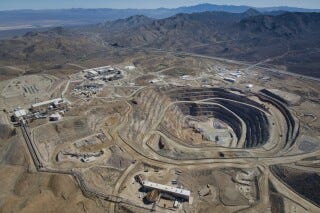
There has been a growing awareness over the last couple of years—and especially the last year—about the “rare earth element” challenge.
It is more than a challenge, it is a problem. Why a problem? Global supply systems, etc...
Those who know the industrial history of WWII will know that despite of their technological skills, the Germans could not produce the number and quality of the weapons they wanted to because they could not source sufficient critical “exotic” raw materials—not to mention just fuel. As a result, they could produce only a few and those they could produce, such as jet engines, had to use lesser materials and did not last as long.
The Japanese, as an island nation with few raw materials but human capital, struggled with even the basics once the peacetime “global supply chain” became but a memory.
Their problems weren’t that they didn’t know they had a problem accessing materials at the start of the war, as they had stockpiled cobalt, vanadium, titanium, tungsten, chromium, molybdenum, and other exotic metals. The Germans even had access to some usable deposits in some of the conquered lands such as France and the Balkans, the Japanese in China. However, they did not stockpile for a long war, and by 1943 allied interdiction of sea and ground lines of communication made getting materials to their increasingly bombed-out industrial areas exceptionally difficult and inefficient.
In 2025, it is the USA and its allies that are Nazi Germany and Imperial Japan when it comes to critical supplies needed to fight any kind of protracted war.
The People’s Republic of China (PRC) is the nation that is not just the industrial superpower, they have managed to corner both the supply and the supply chain of the world’s light and heavy rare earth elements—and in many critical cases the ability to process it into usable material.
Regulars here know what the PRC has done in shipbuilding. While the USA and its allies focused on handling millions of uninvited, military-aged, unemployable young men from wherever after a couple of decades engaging in fruitless imperial policing actions and nation building for people uninterested and unable to be built, the PRC was focused on its strategic goal: to supplant The West as the leader of the world.
They looked at history with a cold, old world eye, and set to work. One of those lines of operation was the raw material that anyone would need to seriously contest them in the military sphere once they were strong enough to stand.
It isn’t just the mines and supply chains, it is how the CCP through controlling interest in many companies is prioritizing China.
I had a bit of time on the road over the weekend and listened to the MWI Podcast: The US Military’s Critical Minerals Challenge, with Dr. Morgan Bazilian, director of the Payne Institute for Public Policy at the Colorado School of Mines.
You can listen to the above link or via the Spotify link below.
I thought I was doing a responsible job tracking the issue, but man was I wrong. I learned more in that 1-hr podcast than I have in my readings for the last few years.
The bold-faced takeaway for me was that, for a moment, I was reassured to hear we do have a reserve based on expected requirements found from a series of wargames against the PRC, but it is only enough of a reserve to fight for one year.
Excuse me?
I’ve got news for everybody. The next great Pacific War that might evolve into a world war, it's gonna go for a long time. Expect at least World War II length. We are not ready. All indications show that China has been getting ready for years using the best mercantilist, capitalist, and good old fashioned communist bullying.
We are a bit late to the game. Just one of the examples that kept coming up during the interview was MP Materials (MP). You know, the company that owns the only operational rare earth mine in the U.S. at Mountain Pass, California.
The Defense Department will become the largest shareholder in rare earth miner MP Materials after agreeing to buy $400 million of its preferred stock, the company said Thursday.
MP Materials owns the only operational rare earth mine in the U.S. at Mountain Pass, California, about 60 miles outside Las Vegas. Proceeds from the Pentagon investment will be used to expand MP’s rare earths processing capacity and magnet production, the company said.
…
Rare earths are used in magnets that are key components in a range of military weapons systems including the F-35 warplane, drones and submarines, according to the Defense Department.
The U.S. was almost entirely dependent on foreign countries for rare earths in 2023, with China representing about 70% of imports, according to the U.S. Geological Survey.
…
U.S. miners are facing a unique threat from “Chinese mercantilism,” Litinsky said. The Pentagon investment in MP could serve as a model for similar deals with other U.S. companies, the CEO said.
“It’s a new way forward to accelerate free markets, to get the supply chain on shore that we want and make sure that mercantilism is not going to hurt our ability to do so,” Litinsky said.
Remember, MP Minerals owned the only U.S. rare earth mine. However, who was benefiting?
As of December 2021, Shenghe Resources, a Chinese company partly owned by China's Ministry of Natural Resources, held approximately 7.7% of MP Materials' stock.
MP Mining could produce all the rare earths it wanted, but in the U.S. at least, there wasn’t much they could do with it. They primarily sent their rare earth ore concentrate to the PRC for refining. The refining was done by, you guessed it. Shenghe Resources, owned by the PRC’s Ministry of Natural Resources, which is controlled by the Chinese Communist Party.
Bravo Zulu to Interior Secretary Doug Burgum.
The Pentagon is buying a newly created class of preferred shares convertible into MP Materials’ common stock, in addition to a warrant convertible at $30.03 a share for 10 years that allows the U.S. to buy additional common stock.
Exercising the convertible preferred shares and the warrant would leave the Pentagon holding about a 15% stake in MP Materials as of July 9, nearly twice the 8.61% held by Litinsky and the 8.27% held by BlackRock Fund Advisors, according to FactSet data.
MP Materials will build its second magnet manufacturing facility in the U.S. to serve defense and commercial customers with support from the Pentagon. The facility, whose location wasn’t disclosed, is expected to start commissioning in 2028 and will bring MP Materials rare earth magnet manufacturing capacity to 10,000 metric tons annually.
This manufacturing capacity is enough to “meaningfully support U.S. defense and commercial needs,” Litinsky told investors on a call Thursday morning.
The Pentagon has agreed to buy 100% of the magnets made at the new facility, called 10X, for 10 years after the plant is built to support defense needs and the commercial market. JPMorgan and Goldman Sachs are providing $1 billion to help finance the manufacturing facility.
The Pentagon is also guaranteeing a minimum price of $110 per kilogram for 10 years for neodymium-praseodymium oxide, or NdPr, that is stockpiled or sold by MP Materials. NdPr is a rare earth compound used to make permanent magnets.
If the market price is below $110 per kilogram, the U.S. will pay MP Materials the difference in a quarterly cash payment, Litinsky said. The Pentagon, in turn, will receive 30% of the upside above $110 per kilogram once MP Materials’ second magnet facility is operational, the CEO said.
You can’t fight and win a war when you have to rely on your enemy for the raw material to build weapons.
More.
Faster.
I started working for the Navy (ASN(FM&C)) at the Pentagon as a Presidential Management Intern (PMI) in 1982. A two-year program that led to my hiring as a budget analyst (and a 30-year civil-servant career), a PMI had three rotational assignments. Mine were at Bath Iron Works learning about shipbuilding, working for a U.S. senator learning about how Congress worked, and working for Eve Pyatt, the Assistant Secretary of the Navy for Shibuilding and Logistics. Mr. Pyatt gave me two assignments the then SECNAV, John Lehman, was interested in. The first was on the issue of defense contractor profitability and progress-payment funding rates. After a month research and analysis, I recommended changing from a percentage-of-sales perspective (by which defense contractors complained they were underpaid by half compared to their non-defense business lines and wanted to increase their profit percentage by 2 percent and reimbursement cash flow rate by 10 percent) to a percentage-of-government-assets-used (which clearly highlighted they were overcompensated at twice the rate as their non-defense business lines and needed a reduction in profit percentage (2 percent) and a reduction (5 percent) in free progress-payment cash flow to equate better with non-defense private company, competitive experience). The second tasking was a SECNAV question about "If the war started tomorrow, how long would it last?" After studying the Navy and Marine Corps platforms and weapons inventory, probability of kill and supply chain, my answer to SECNAV was "90 days", after that "the pipeline went cold". I used that quick analysis during 1986 through 1991 when I was the lead analyst for the Navy's weapons procurement budget, questioning the legitimacy of the Non-Nuclear Ordinance Requirement (NNOR) calculations on weapons acquisition goals--which I believed, based on WW2 history, were too low. I suggested cutting a few fighter jets and buying more missiles and torpedoes at a 10-1 or 20-1 ratio tradeoff was necessary to ensure we could secure a favorable outcome if war broke out. That recommendation and lesson were never adopted and we now see from the Ukraine experience we lost time and are now exposed. So again, cut the number of fighter aircraft and maybe a few destroyers and buy munitions (and frigates) at the consumption rate we'll need to ensure an American flag still flies at the end of the next war. After all, in a war of attrition in the western Pacific, after the U.S. and allied ships and submarines have consumed all their expendables and become targets, the locals will win. It's all about logistics and the supply chain, stupid!
This is excellent and to the point. We dropped the ball on this under the “expert advice” from the NeoCons who assured us that China would always give us the best deal. By the way the same sentiments were in vogue by the Best of the Best re: steel, rubber etc. How did that turn out on 12/7/41?
We can go back to WW2 build up. Real brilliant people actually determined how we could build bombers at one per hour. The guy who led the effort was a Dane with a 6th grade education who, with assistance of assistants who helped build the moving assembly line in Highland Park and the Rouge Plant. By the way Sorensen got his experience producing car that had on average 5,000 parts by his estimation. The B24 had about 500,000 parts and bused mainly aluminum vice steel.
A man who helped build the Hoover Dam built ships his own way using welding to make ships using welding. He produced them faster than the Kriegsmarine could sink them. By the way the ships were designed in 1920 using technology from the 1890’s.
The man who was in charge of war production spent 10 years at Ford until GM lured him to their organization. He, like Cast Iron Charlie, was a Danish immigrant with a limited formal education. He was given a direct commission to 3 star general and ensured that the vast US economy worked together.
I was home ported in Long Beach Naval Shipyard. It was built quickly and served ably in WW2 until 1995.
If we look at the FACTS in WW2, we could learn enough. We could simultaneously solve the rare earths issues simultaneously with rebuilding our shipyards and building new ones.