
Fullbore Friday

When people think of the U-boat war in the Atlantic, they think of the North Atlantic: cold, windy, grey, foreboding. Three of the best movies on the topic, The Cruel Sea, Das Boot, and Greyhound, only reinforce this view.
There was a lot more to the war than that. Far from sideshows, other theaters were critical points in the Axis’s attempt to choke supplies to Europe. Gaylord T. M. Kelshall’s superb book, The U-Boat War in the Caribbean, does the best job in pointing out that theater from the mouth of the Mississippi River to where our focus is today.
There was also the Southern Atlantic and African theaters. How much of the war was fought there?
Here’s a map where U-boats were sunk, and by whom.
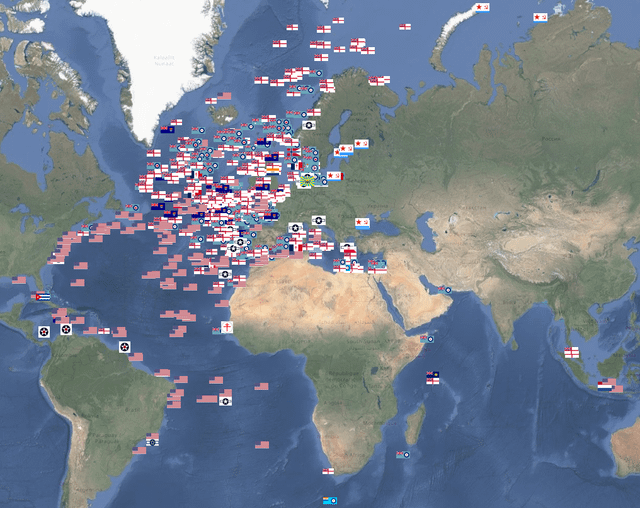
It was a four-year campaign.
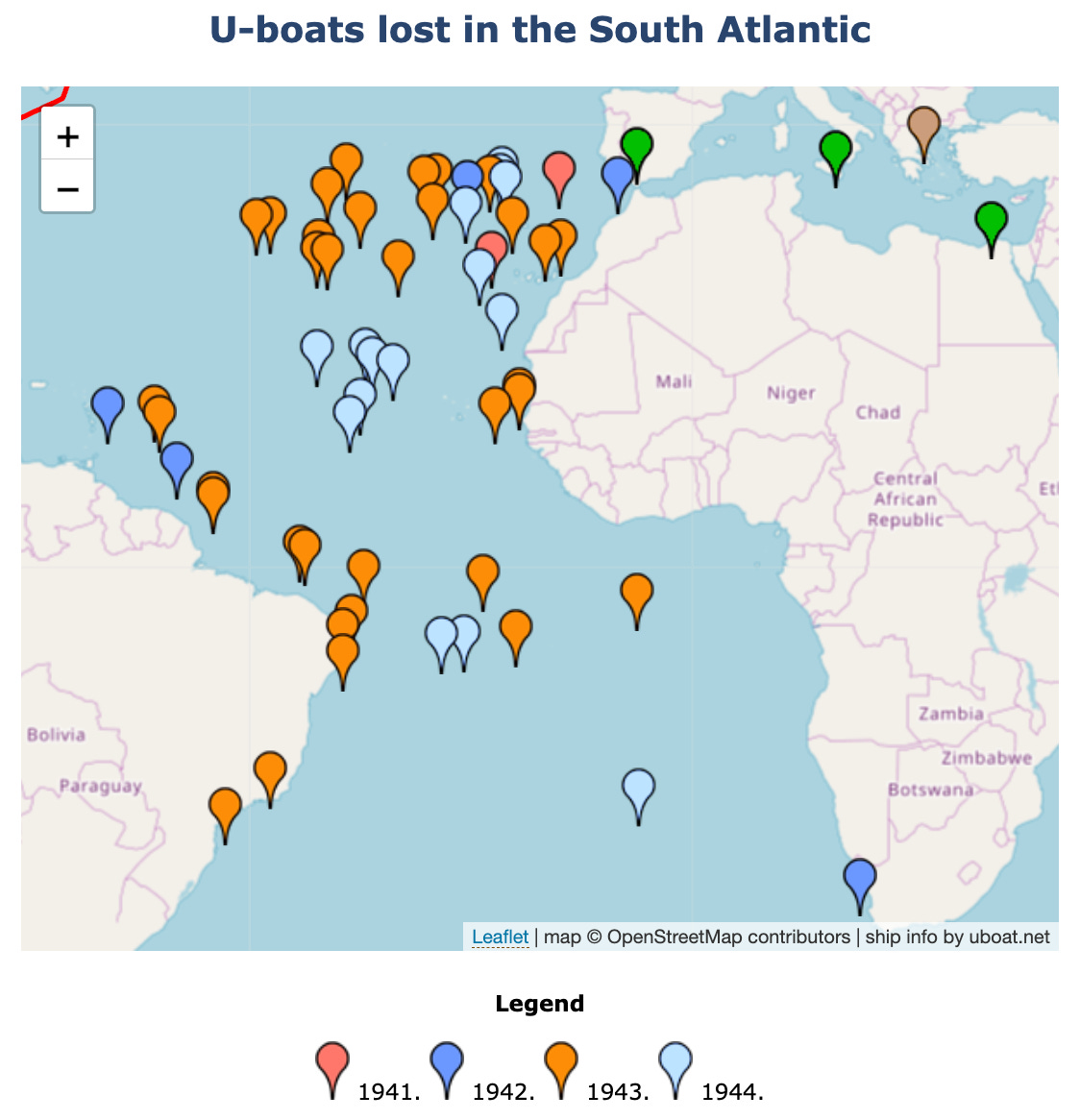
From Trinidad to South Africa, a lot of allied shipping was lost.
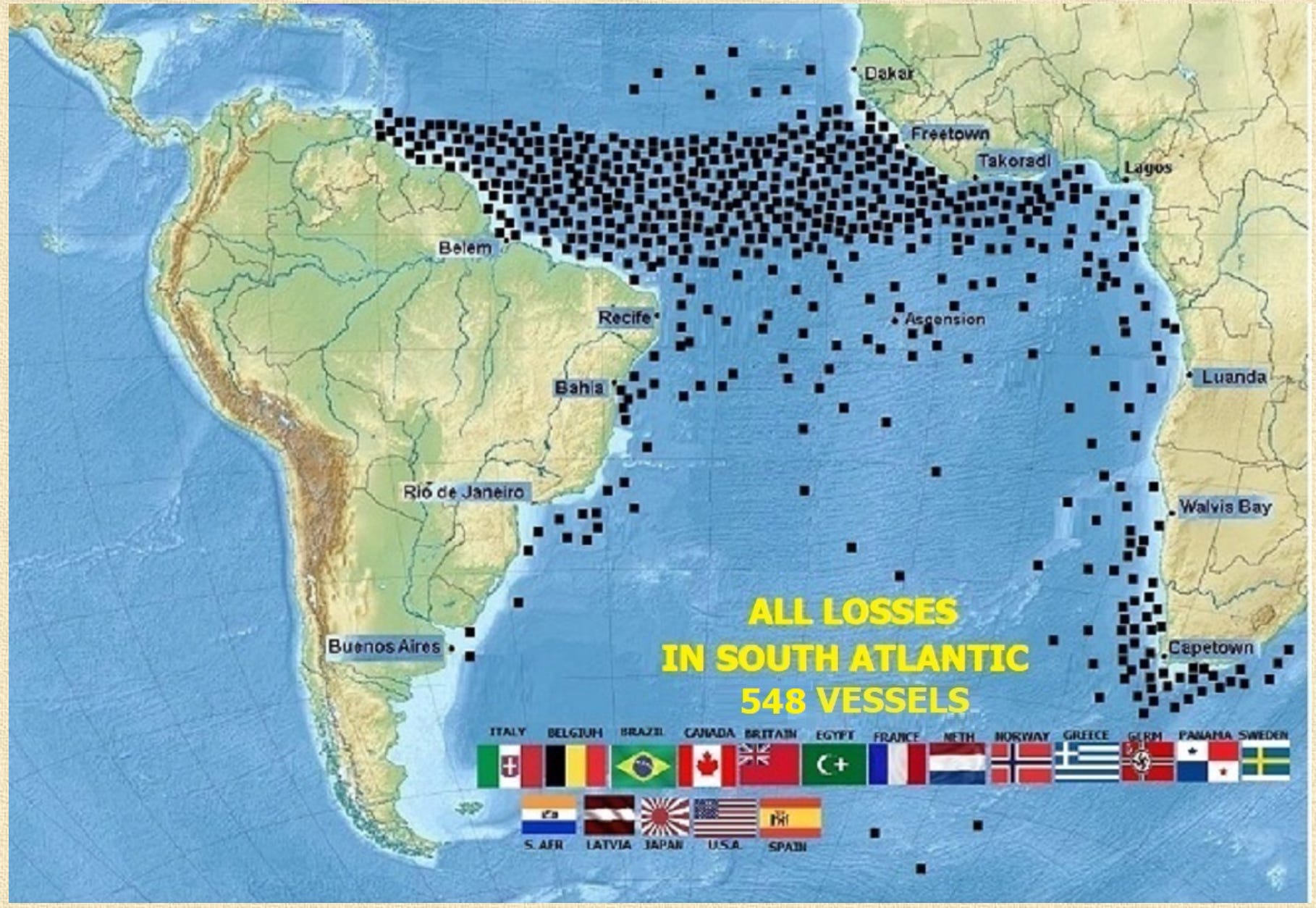
It was hard to keep a U-boat at sea. Food, fuel, and weapons can run out faster than your men’s endurance. The most dangerous part of the deployment was often directly proportional to how close you got to Europe.
It would only be logical that the Axis would look for some way to resupply their submarines at sea. Likewise, it would be logical that the Allies would try to stop them.
Unconventional war wrapped around unconventional thinking. Amazing actions by amazing people…remembered by few.
But not today.
First, as we always want to do, let’s go to the chartroom.
The second largest island off Africa, off the coast of Nigeria, was once known as Fernando Po, now Bioko. Once part of Spanish Guinea, now Republic of Equatorial Guinea.
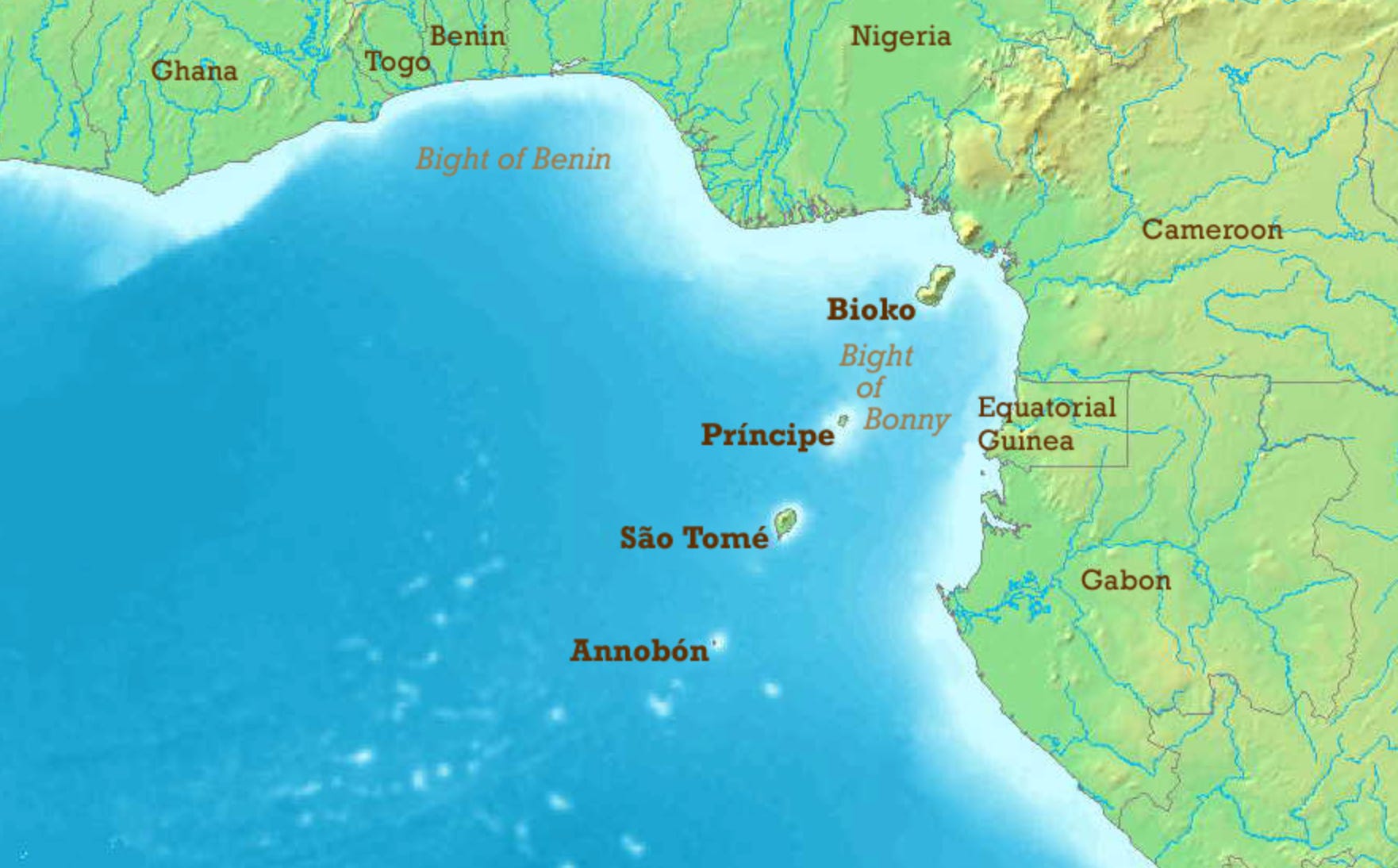
Did you catch that? During WWII, a Spanish colony. Officially neutral, but all Spanish territory was, well, flexible. That was of use to the Axis … and a problem for the Allies.
Wiki, as linked above, has the best summary—so we will steal generously from them.
In 1941 the British Admiralty started receiving reports that German submarines were using the rivers in Vichy French parts of Africa as a base for refuelling. The unit selected to investigate the reports was the Small Scale Raiding Force (SSRF) also known as No. 62 Commando. … under the command of Major Gus March-Phillipps.
Maid Honor, a 65-ton Brixham yacht trawler, left Poole harbour on 9 August 1941, bound for West Africa. The five man crew were under the command of March-Phillipps. … After Maid Honor's arrival in Freetown the search for the German submarine bases started. Sailing into the many rivers and deltas in the area, they failed to locate any submarines or evidence of a submarine base.
If this plot sounds familiar, you’re not imagining things. Its framework was the foundation of the rather silly recent movie last year, Guy Ritchie’s, The Ministry Of Ungentlemanly Warfare.
While the commandos were searching for the German submarine bases, SOE agents had become aware of three vessels in the port of Santa Isabel on the Spanish island of Fernando Po 30 kilometres (19 mi) off the coast of Africa near the border of Nigeria and Cameroon.
The three ships were the Italian 8,500-ton merchant vessel Duchessa d'Aosta, the large German tug Likomba, and a diesel-powered barge Bibundi. Duchessa d'Aosta had a working radio which was considered a threat, with the potential to provide details of Allied naval movements. … SOE agent Leonard Guise kept the ships under observation, and in August 1941 submitted a plan to seize Likomba and disable Duchessa d'Aosta. Approval for the military operation in a neutral port was given by the Admiralty on 20 November 1941.
This is all going on prior to the U.S. entry in the war and things were not looking too great for the United Kingdom.
To transport the raiders to the island, two tugs, Vulcan and Nuneaton, were provided by the Governor of Nigeria, Sir Bernard Bourdillon. The raiding force would consist of 32 men: four SOE agents, 11 commandos from the SSRF and 17 men recruited from the local population to crew the two tugs. The mission suffered a blow when the British General Officer Commanding (GOC) West Africa Command, General Sir George Giffard refused to support the mission. He declined to release the 17 men required, stating it would compromise some unnamed plans he had in mind, and that the act would be seen as piracy and could lead to repercussions. Responding to the concerns of the GOC West Africa, the Admiralty suspended the operation. The Foreign Office was also not in favour of the operation, nor was the British Embassy in Madrid, which was concerned about the possible reactions of the Spanish government. The final go-ahead, eventually supported by the Foreign Office, was not given until 6 January 1942, on the grounds that, while suspicion of British involvement in the raid was inevitable, what counted was the avoidance of any tangible proof. As a safeguard the Admiralty also dispatched HMS Violet, a Flower-class corvette, to intercept the vessels at sea, which would provide the cover story that they had been intercepted while trying to make their way home to Europe.
Everyone has a reason to say “no” to a good mission…but for those who matter, a good mission sells itself. Also, if your big guns are a Flower-class corvette…
SOE agent Richard Lippett had obtained employment with the shipping company John Holt & Co (Liverpool), which had business offices on the island. ... He became aware that the crew of Duchessa d'Aosta were in the habit of accepting invitations to parties ashore and had held their own party aboard ship on 6 January 1942. …
The raiders left Lagos in their two tugs on the morning of 11 January 1942, …. They approached Santa Isabel harbour and at 23:15 and 23:30 hours on 14 January 1942; both tugs were in position 180 metres (590 ft) outside the harbour. Onshore, Lippett had arranged for the officers from Duchessa d'Aosta to be invited to a dinner party; 12 Italian officers and two German officers from Likomba attended.
Fiction is never as good as real history.
Remember, there is no such thing as a normal watch in a boring backwater.
The boarding parties assembled on the decks of the two tugs as they entered the harbour. Vulcan, with March-Phillipps and his second in command Appleyard on board, headed for Duchessa d'Aosta. As they approached, a few men could be seen on the after deck of the merchant vessel, but they seemed to take no notice of the tug other than to shine a torch in its direction. At the same time, folbots under the command of Hayes from Nuneaton, were being paddled towards Likomba and Bibundi, which were moored together. Challenged by a watchman on Bibundi, they persuaded him with their reply that it was the ship's captain coming back on board. The men from the canoes boarded Bibundi, and the two-man crew on watch jumped overboard. After attaching explosive charges on the anchor chain, the commandos guided Nuneaton alongside Likomba to take her and Bibundi in tow.
With that taken care of, now for the big prize.
As soon as they were ready, the charges were detonated, releasing the anchors, and Nuneaton started to tow Likomba out of the harbour. Eleven men from Vulcan had managed to board Duchessa d'Aosta; while one group attached charges on the anchor chains, another searched below-decks, collecting prisoners. Blowing the anchor chains, Vulcan started to tow Duchessa d'Aosta out of the harbour. The explosions had alerted the population of the town, who started to gather on the pier, but no attempts were made to stop the ships from leaving. Several anti-aircraft emplacements opened fire at imagined targets, believing the explosions to have been caused by an aerial attack, but the six-inch guns protecting the harbour from attack from the sea remained silent. From entering the harbour to leaving with the ships under tow, the operation had taken 30 minutes, without any losses to the raiding party.
Yes, the Spanish had a hissy fit, but all in all…it was a superb performance from what today we would call “Special Forces” — the type of mission U.S. Navy SEALs might do.
Like we covered earlier, this was “early” in the war, though for the UK, year three. Such talented people had a long war, and eventually the odds catch up to everyone.
After the raid March-Phillipps was awarded the Distinguished Service Order, Hayes was awarded the Military Cross, and Appleyard a Bar to his Military Cross; Lippett and Guise were each appointed Member of the Order of the British Empire. Another commando, and the only professional sailor on the raid, Private Anders Lassen, was the first man to board Duchessa d'Aosta. For conspicuous efficiency in getting the ship under way, Lassen was given a commission in the field,[12] and the immediate award of the Military Cross.
March-Phillipps was killed during Operation Aquatint in September 1942. On the same mission, Hayes evaded capture and crossed the Spanish border, only to be handed over to the Germans who kept him in solitary confinement for nine months before he was executed by firing squad on 13 July 1943. Appleyard later joined the Special Air Service, and on the same day that Hayes was executed Appleyard was reported missing when his plane failed to return from a mission. Lassen also joined the Special Air Service; he was awarded two bars to his MC and promoted to major. He was killed in Italy in 1945, and awarded a posthumous Victoria Cross for his actions there.
Lassen was reportedly the only non-Commonwealth (he was Danish) officer awarded the VC in WWII.
Amazing stories you can find down history’s abandoned alleyways. Also important lessons for today.
This week I was at Chief’s Initiation. One of the tasks was to write a report and present on a Medal Of Honor recipient. One of the Baby Goats was giving us an unenthusiastic yet informative presentation. Afterwards, I spoke with her on this, and noted that Hero Stories, like Fullbore Friday, exist to tell us a deeper truth.
That truth is we can go farther. We can do more, and there is a legacy to live up to. Hero Stories need passion, drive, and show the teller believes in the story for the listeners. Fullbore Fridays always deliver on that, and I am thankful.
A classic "cutting out" operation. Something the RN of Nelson's day made into an art form.
15 YO Midshipmen in charge of 3 ships boats and an LT leading from the cutter with a 3 pounder in the prow
shades of Hornblower or Operation Creek:
"In 1978 James Leasor wrote an account of the Ehrenfels mission in the book Boarding Party: The Last Charge of the Calcutta Light Horse. The film The Sea Wolves based on the book was made in 1980, with actors David Niven, Gregory Peck, Trevor Howard, Roger Moore and Patrick Macnee"
https://en.wikipedia.org/wiki/Operation_Creek