
Fullbore Friday
...war in the high north...

At some point in the post-WWII era, someone looked over at that quiet, unassuming man and thought, “He’s just a banker.”
Really?
Picture in your mind a British officer from WWII. This man, John Cruickshank, is almost right from central casting
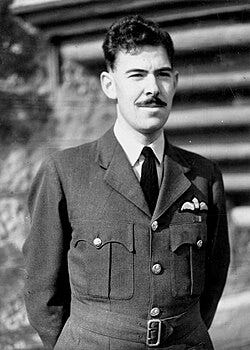
Just a junior officer flying a slow seaplane out of the Shetland Islands, taking his crew north.
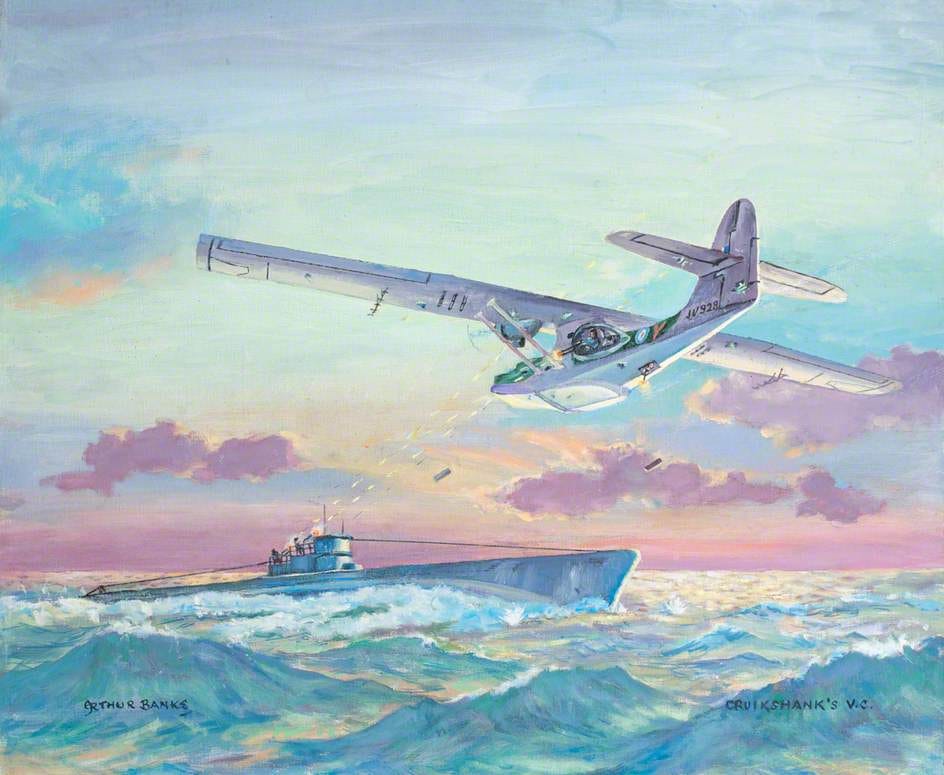
Flying Officer Cruickshank was twenty-four years old when he piloted a Consolidated Catalina anti-submarine flying boat from Sullom Voe on 17 July 1944 on a patrol north into the Norwegian Sea. The objective was to protect the British Home Fleet as it returned from the unsuccessful Operation Mascot raid on the German battleship Tirpitz. There, Cruickshank’s “Cat” caught a German Type VIIC U-boat on the surface.
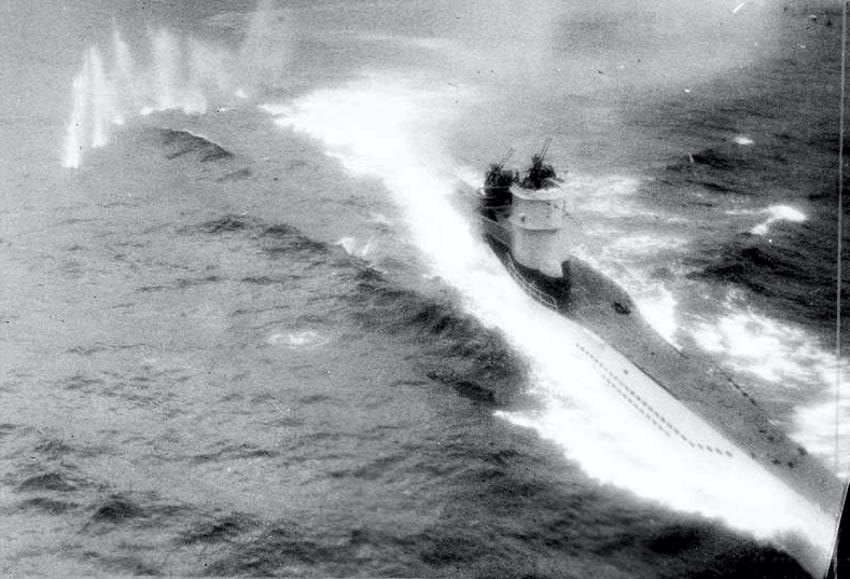
At this point in the war, U-boats had been fitted with anti-aircraft guns as an attempt to counter the aerial threat. Cruickshank nevertheless attacked the U-boat, flying his Catalina through a hail of flak. His first pass was unsuccessful, as his depth charges did not release. He brought the aircraft around for a second pass, this time successful as his charges straddled the U-boat, sinking it with the loss of all 52 crew members. The U-boat was first thought to be U-347, as Cruickshank’s VC citation states, but later research suggested that it was actually U-361.[6]
However, the German anti-aircraft fire had been deadly accurate, killing Cruickshank’s navigator and injuring four other members of the crew, including Cruickshank and the less seriously wounded second pilot, Flight Sergeant Jack Garnett. Cruickshank was hit in seventy-two places, with two serious wounds to his lungs and ten penetrating wounds to his lower limbs. Despite this, he refused medical attention until he was sure that the appropriate radio signals had been sent and the aircraft was on course for its home base. Even then, he refused morphine, aware that it would cloud his judgement. Flying through the night, it took the damaged Catalina five and a half hours to return to Sullom Voe, with Garnett at the controls and Cruickshank lapsing in and out of consciousness in the back. Cruickshank then returned to the cockpit and took command of the aircraft again. Deciding that the light and the sea conditions for a water landing were too risky for the inexperienced Garnett to put the aircraft down safely, he kept the flying boat in the air and circled for an extra hour until he considered it safer, when they landed the Catalina on the water and taxied to an area where it could be safely beached.
When the RAF medical officer boarded the aircraft, he discovered Cruickshank had lost a great deal of blood, and had to give him a transfusion before he was stable enough to be transferred to hospital.[7] John Cruickshank’s injuries were such that he never flew in command of an aircraft again. For his actions in sinking the U-boat and saving his crew he received the Victoria Cross, while Flight Sergeant Jack Garnett received the Distinguished Flying Medal. Later that month, Cruickshank was promoted to flight lieutenant (war-substantive), with effect from 10 July.
A great short video from the Imperial War Museum from six years ago, right before his 100th birthday.
His Victoria Cross Citation is well worth the read.
Air Ministry, 1st September, 1944.
The King has been graciously pleased to confer the Victoria Cross on the undermentioned officer in recognition of most conspicuous bravery: —
Flying Officer John Alexander Cruickshank (126700), Royal Air Force Volunteer Reserve. No. 210 Squadron.
This officer was the captain and pilot of a Catalina flying boat which was recently engaged on an anti-submarine patrol over northern waters. When a U-boat was sighted on the surface, Flying Officer Cruickshank at once turned to the attack. In the face of fierce anti-aircraft fire he manoeuvred into position and ran in to release his depth charges. Unfortunately they failed to drop.
Flying Officer Cruickshank knew that the failure of this attack had deprived him of the advantage of surprise and that his aircraft offered a good target to the enemy’s determined and now heartened gunners.
Without hesitation, he climbed and turned to come in again. The Catalina was met by intense and accurate fire and was repeatedly hit. The navigator/bomb aimer was killed. The second pilot and two other members of the crew were injured. Flying Officer Cruickshank was struck in seventy-two places, receiving two serious wounds in the lungs and ten penetrating wounds in the lower limbs. His aircraft was badly damaged and filled with the fumes of exploding shells. But he did not falter. He pressed home his attack, and released the depth charges himself, straddling the submarine perfectly. The U-boat was sunk.
He then collapsed and the second pilot took over the controls. He recovered shortly afterwards and, though bleeding profusely, insisted on resuming command and retaining it until he was satisfied that the damaged aircraft was under control, that a course had been set for base and that all the necessary signals had been sent. Only then would he consent to receive medical aid and have his wounds attended to. He refused morphia in case it might prevent him from carrying on.
During the next five and a half hours of the return flight he several times lapsed into unconsciousness owing to loss of blood. When he came to his first thought on each occasion was for the safety of his aircraft and crew. The damaged aircraft eventually reached base but it was clear that an immediate landing would be a hazardous task for the wounded and less experienced second pilot. Although able to breathe only with the greatest difficulty, Flying Officer Cruickshank insisted on being carried forward and propped up in the second pilot’s seat. For a full hour, in spite of his agony and ever-increasing weakness, he gave orders as necessary, refusing to allow the aircraft to be brought down until the conditions of light and sea made this possible without undue risk.
With his assistance the aircraft was safely landed on the water. He then directed the taxying and beaching of the aircraft so that it could easily be salvaged. When the medical officer went on board, Flying Officer Cruickshank collapsed and he had to be given a blood transfusion before he could be removed to hospital.
By pressing home the second attack in his gravely wounded condition and continuing his exertions on the return journey with his strength failing all the time, he seriously prejudiced his chance of survival even if the aircraft safely reached its base. Throughout, he set an example of determination, fortitude and devotion to duty in keeping with the highest traditions of the Service.
After the war, he returned to banking and only passed away last summer, aged 105—the last surviving Victoria Cross recipient from WWII.
An interesting side note is the background of the U-boat he attacked.
U-361 was sunk on her third patrol, less than a year before the war would be over. Not once on any of her patrols did she sink a single ship. Not a one.
This was her crew.
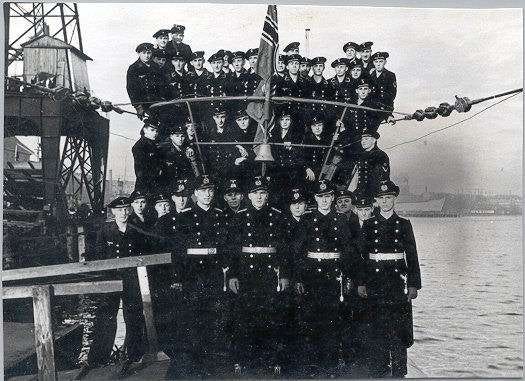
Here they were, bristling with their late-war AAA upgrade, right before the depth charge exploded on the second run, her hull breached, she sank, and all were lost at sea. I am sure those who were manning the AAA were on the surface for a while, but even in the summer in the North Atlantic, the cold gets you quickly.
And here is where she was sunk, patrolling the convoy route to Murmansk.
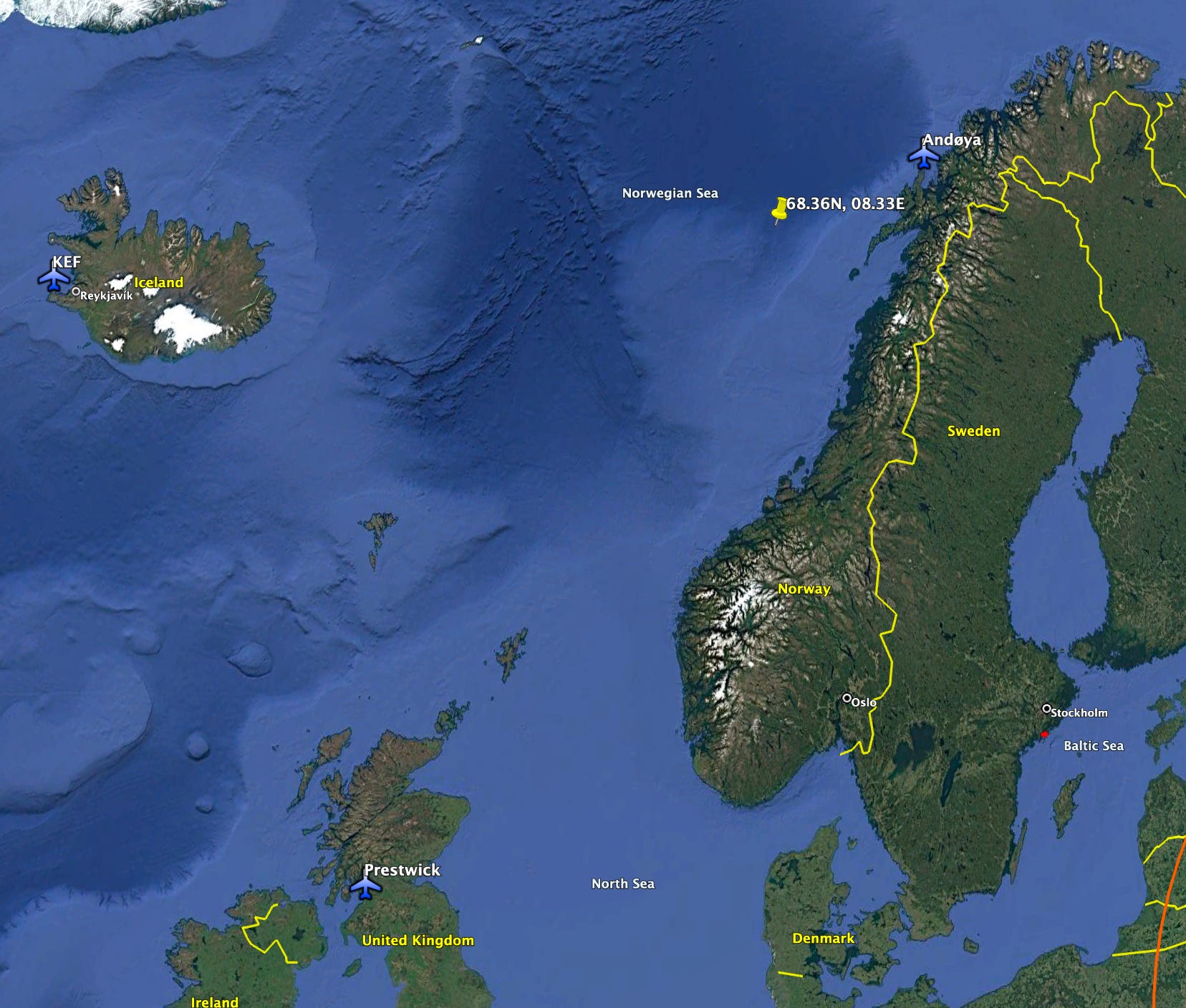
The wars we fight.
Some come home. Some do not. Some see well into the next century. Some will never see another sunrise.
Such has been the human condition for tens of thousands of years, and will be for tens of thousands of years.
Also, that nice young banker that is helping you with your HELOC? If fate placed him there, he very well could be exactly like Cruickshank. Heroes walk all around us; they just don’t know it because fate dealt them a different set of cards, and we’ll never see it.
Absent Comrades, Fallen Friends, and Honorable Opponents!
You have to love the way the British understate his condition:
“seriously prejudiced his chance of survival “