

First of all, let’s head to the chartroom.
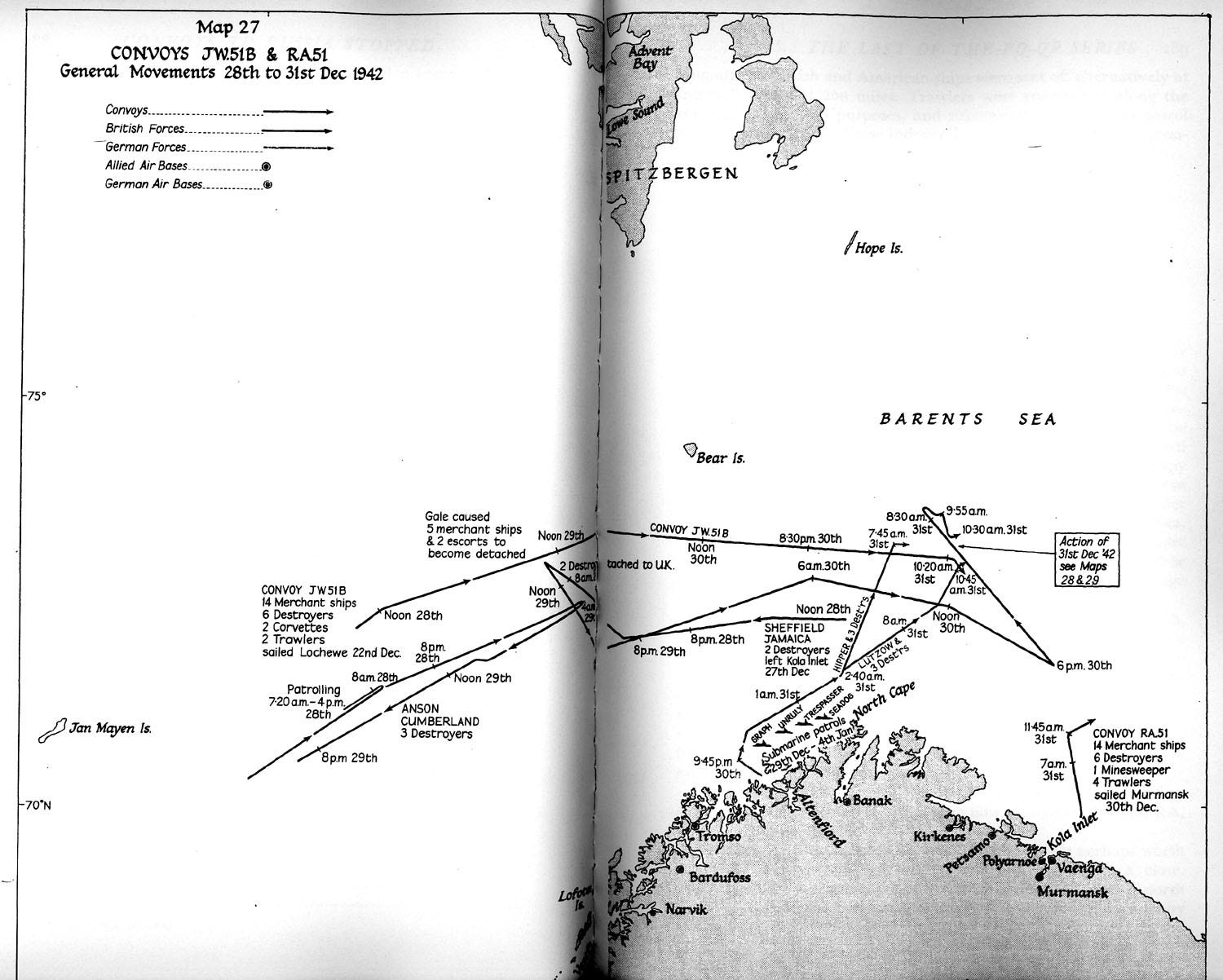
That’s right kiddies…we’re heading to the Battle of the Barents Sea, at the top of the world, in winter.
There are a whole host of stories here, but let’s focus on one ship and her Captain: HMS Onslow (G17) and then-Captain and eventually, Rear-Admiral Robert St Vincent ‘Rupert’ Sherbrooke, VC, CB, DSO, DL—41 years of age at the time of the battle.
In December 1942, Onslow took part in Arctic Convoy JW 51B, joining the convoy on 25 December, with Captain Robert Sherbrooke taking charge of the convoy's close escort of six destroyers, two corvettes, one minesweeper and two trawlers. Five merchant ships, together with the destroyer Oribi and one of the trawlers, were separated from the convoy by bad weather shortly afterwards. On 30 December, the convoy was spotted by the German submarine U-354, and in response a German force consisting of the heavy cruisers Lützow and Admiral Hipper and six destroyers set out from Altafjord to intercept the convoy.
First of all, let’s look at the players.
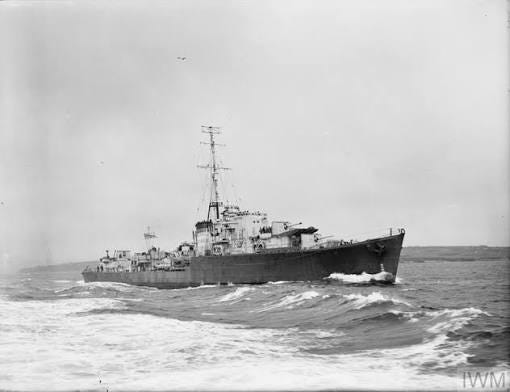
Onslow was an O-class destroyer.
Displacement: 1,610 long tons
Length: 105.2 meters
Armament
4 × single QF 4.7 in (120 mm) guns
1 × single QF 4 in (102 mm) AA gun
1 × quad 2 pdr (40 mm (1.6 in)) AA gun
4 × single 20 mm (0.8 in) AA guns
1 × quadruple 21 in (533 mm) torpedo tubes
4 × throwers and 2 × racks for 70 depth charges
Her largest opponent in this battle:
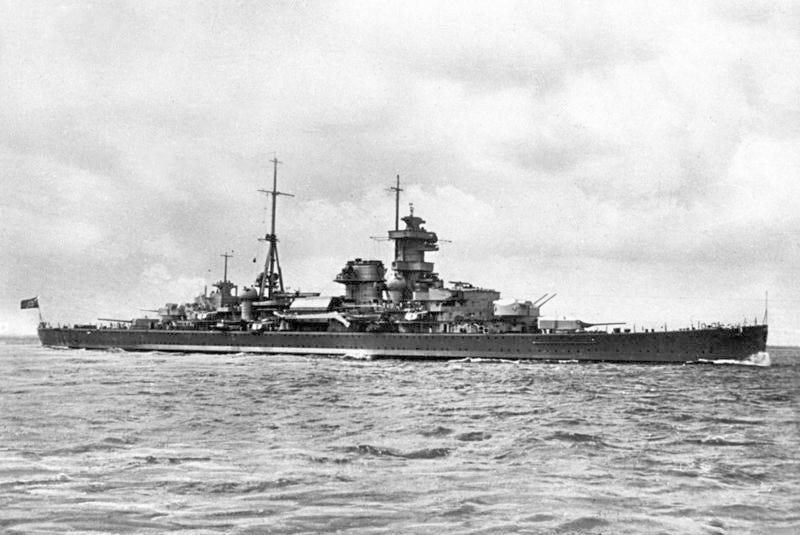
Hipper, lead ship of the Admiral Hipper-class cruisers.
Displacement: 18,200 long tons
Length: 202.8 meters
Armament
12 × 53.3 cm (21 in) torpedo tubes
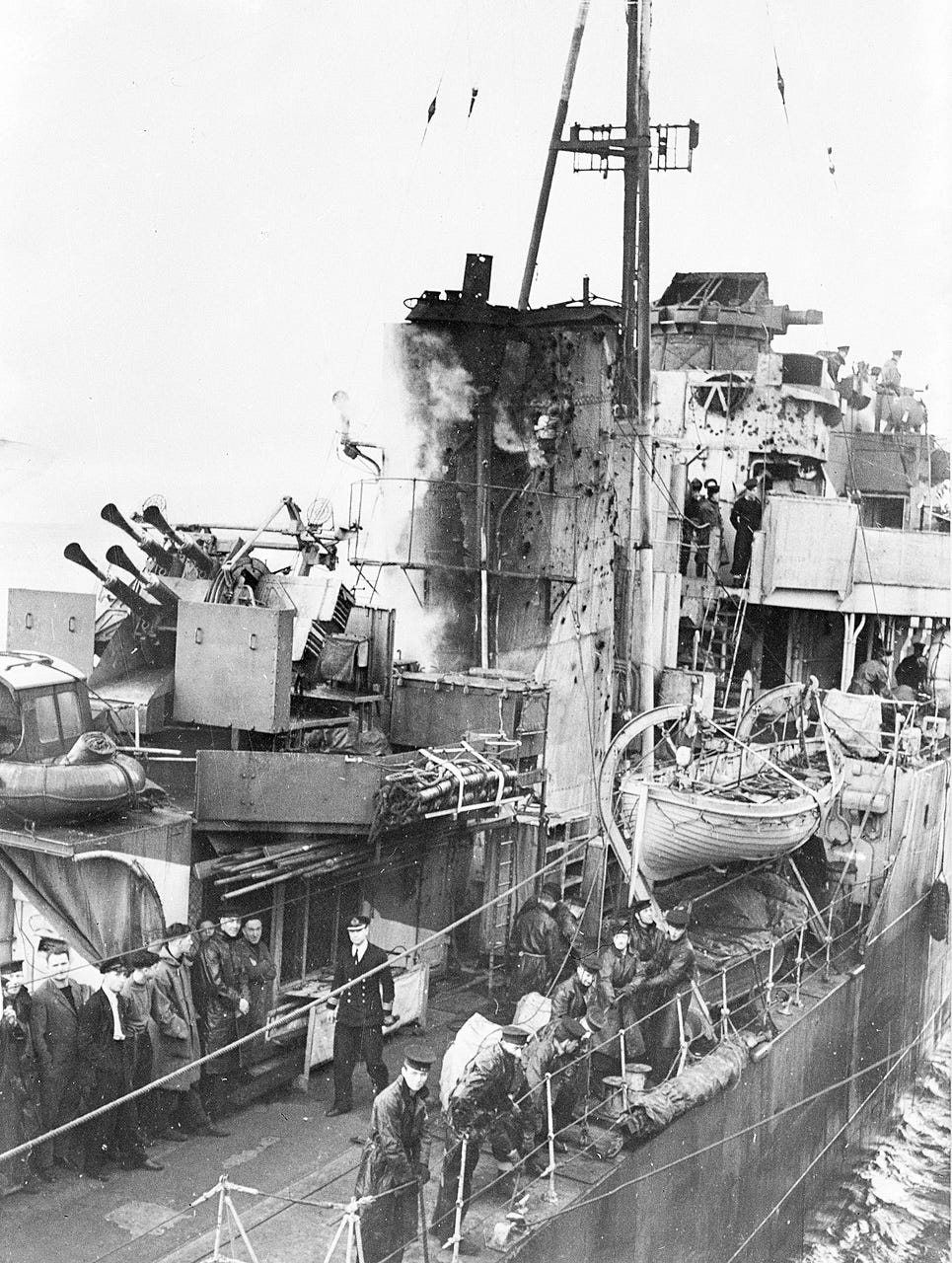
The German force split into two, with Hipper and three destroyers attacking from the northwest and Lutzow and the other three destroyers from the south, with the intention that the escort would be drawn off to the first attacker, leaving the convoy unprotected. The Germans attacked on 31 December, in the Battle of the Barents Sea. Sherbrooke in Onslow led the other destroyers in dummy torpedo attacks against Hipper in order to force the cruiser to keep from closing, while laying a smoke-screen to protect the convoy. After about 40 minutes, Onslow was hit by three shells from Hipper and near missed by a fourth, and badly damaged. Two guns were put out of action and a serious fire started, while 17 members of Onslow's crew were killed, and 23 wounded, including Sherbrooke.
Later, Achates sank after being hit by Hipper, and Obedient damaged, before the arrival of the British cruisers Sheffield and Jamaica changed the course of the battle, damaging Hipper and sinking the destroyer Friedrich Eckoldt before the Germans withdrew. The convoy had been saved, for the cost of the loss of Achates and the minesweeper Bramble. Sherbrooke was awarded the Victoria Cross for his actions in the battle.
Attention to citation:
Captain Sherbrooke, in H.M.S. Onslow, was the Senior Officer in command of the destroyers escorting an important convoy [JW 51B] bound for North Russia. On the morning of 31st December [1942], off the North Cape, he made contact with a greatly superior enemy force [led by the heavy cruiser Hipper and the pocket battleship Lützow] which was attempting to destroy the convoy. Captain Sherbrooke led his destroyers into attack and closed the Enemy. Four times the Enemy tried to attack the convoy, but was forced each time to withdraw behind a smoke screen to avoid the threat of torpedoes, and each time Captain Sherbrooke pursued him and drove him outside gun range of the convoy and towards our covering forces. These engagements lasted about two hours, but after the first forty minutes H.M.S. Onslow was hit, and Captain Sherbrooke was seriously wounded in the face and temporarily lost the use of one eye. Nevertheless he continued to direct the ships under his command until further hits on his own ship compelled him to disengage, but not until he was satisfied that the next Senior Officer had assumed control. It was only then that he agreed to leave the bridge for medical attention, and until the convoy was out of danger he insisted on receiving all reports of the action.
His courage, his fortitude and his cool and prompt decisions inspired all around him. By his leadership and example the convoy was saved from damage and was brought safely to its destination.
Hitler was so pissed off at his surface navy he fired Admiral Raeder and any idea of a usefulness in the war for surface ships, replaced him with Admiral Dönitz—and the rest is history.
Fullbore.
If you want to see some more on the larger battle, Drachinifel put together a great video on it.
Two heavy cruisers? Seems like the Germans lacked an aggressive skipper in the face of an offensively minded opponent. Fullbore matters.
The couple of times I was up there was in September and it was already cold rough and dark...
Can only imagine (barely) how much worse it had to be in December!