
The Accidental CSAR Opportunity
...it is a gift, delivered right to our quarterdeck...

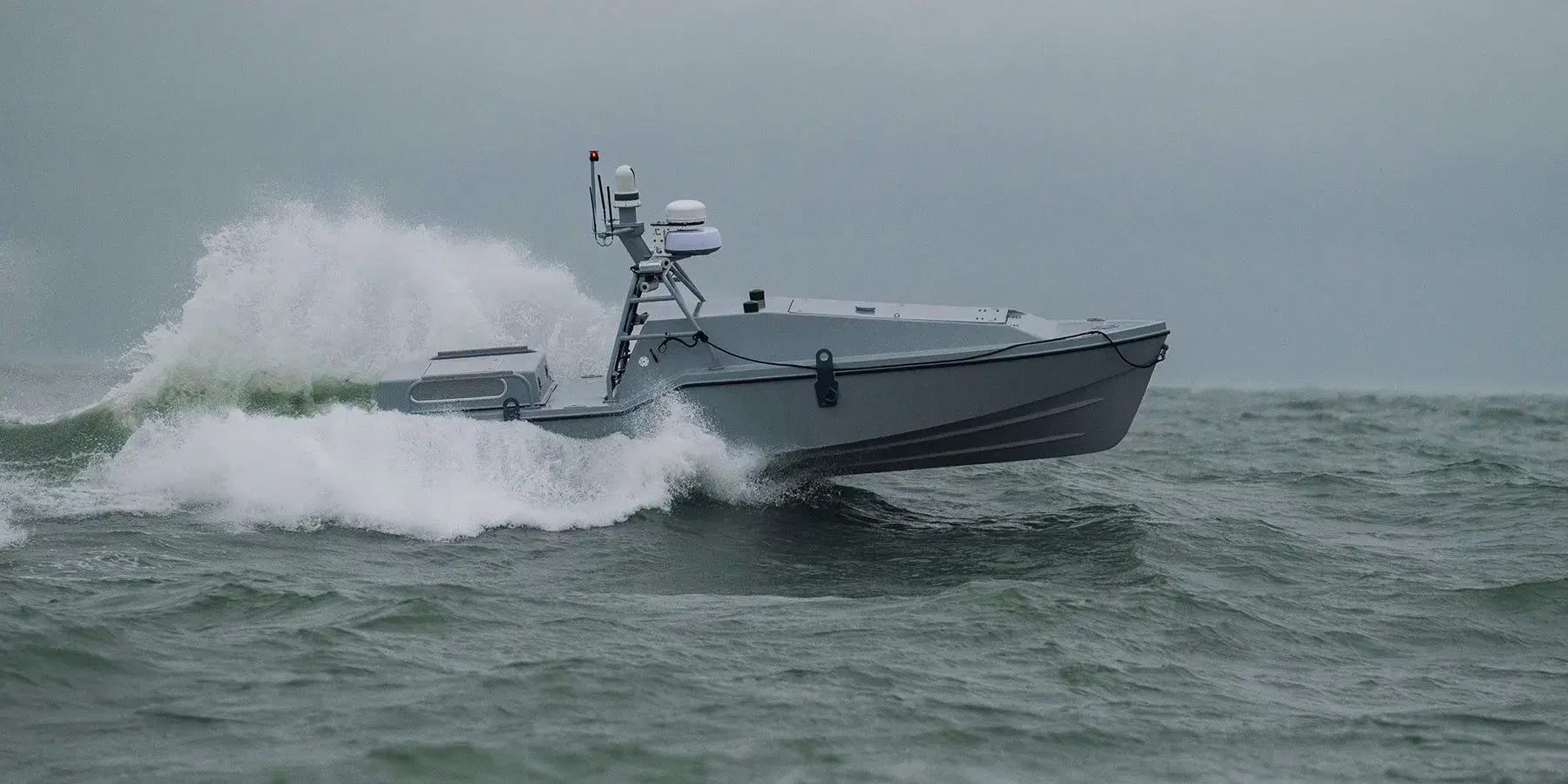
You simply cannot buy PR like this. For the last couple of days, I’ve had a big smile on my face for the good people from Saronic.
Bravo Zulu fellas. Bravo Zulu.
Via Brandi Vincent at Defense Scoop:
The American military deployed an autonomous Corsair maritime drone built by Saronic to find and recover two soldiers who were stranded near the Strait of Hormuz on Monday after their Army AH-64 Apache helicopter crashed during a patrol operation, U.S. Central Command spokesperson Capt. Tim Hawkins told DefenseScoop.
The confirmation of this unique rescue mission comes as military tensions are surging in the Middle East amid the United States-Iran conflict.
It marks the U.S. military’s first publicized use of an autonomous surface vessel to locate and retrieve downed aircrew in real-world warfare, following years of experimentation with different types of sea drones.
“The surface drone that assisted in last night’s rescue of the Apache crew off the coast of Oman was a U.S. Navy Corsair unmanned surface vessel operated by U.S. 5th Fleet’s Task Force 59,” Hawkins said.
In that rescue operation, he told DefenseScoop, the maritime drone picked the two pilots up “and transported them to another location on the water where they were then hoisted up to a helicopter for further transport.”
Simply outstanding. They’ve only been in theater for a few months, and they are still trying to figure out how to make the system work.
Absolute top shelf. As I like to say: get these things forward and show what they can do.
Five out of Five. Promote ahead of peers.
Let’s look again at the stats for the Saronic Corsair;
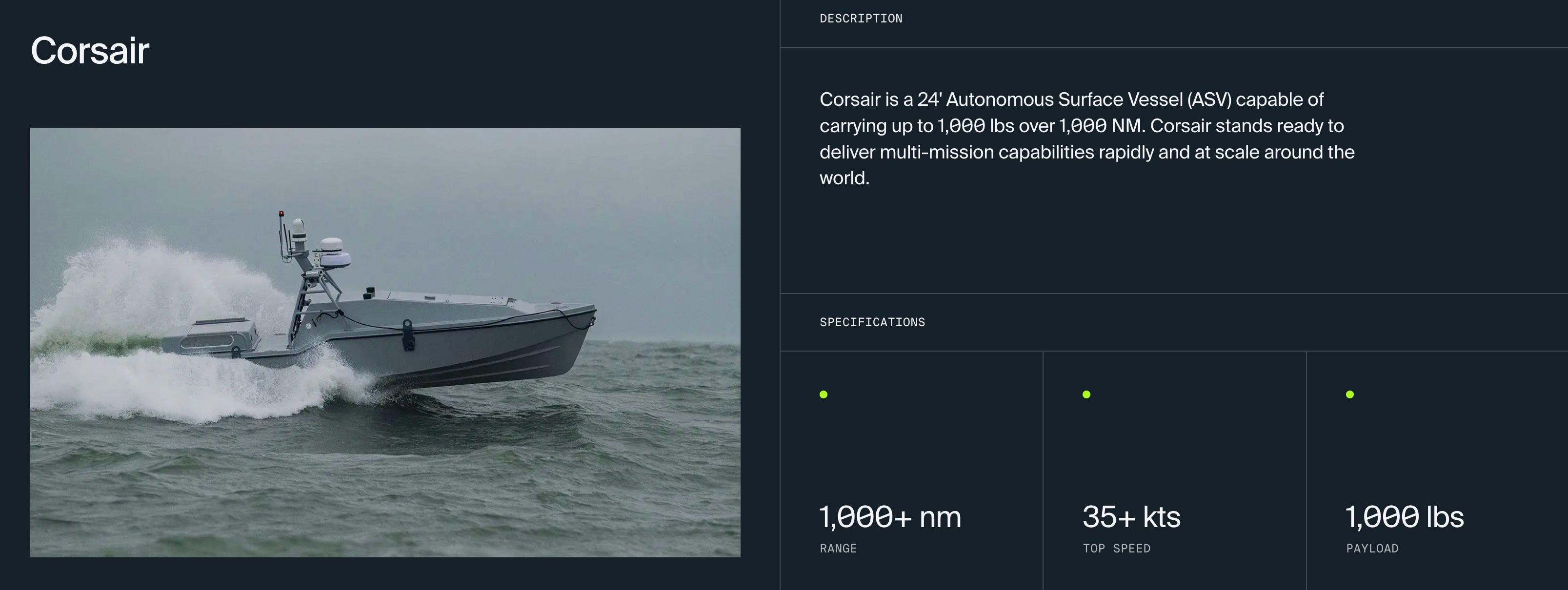
I’d love to see the full performance sheet on what speed it needs for that max range. My guess, if it is anything like my bay boat, that would be in the neighborhood of 25 knots in a reasonable seastate...but that is a long post beyond the scope of today’s discussion.
As always, let’s go to the chartroom. For this specific argument, let’s head to the Chinese coast.
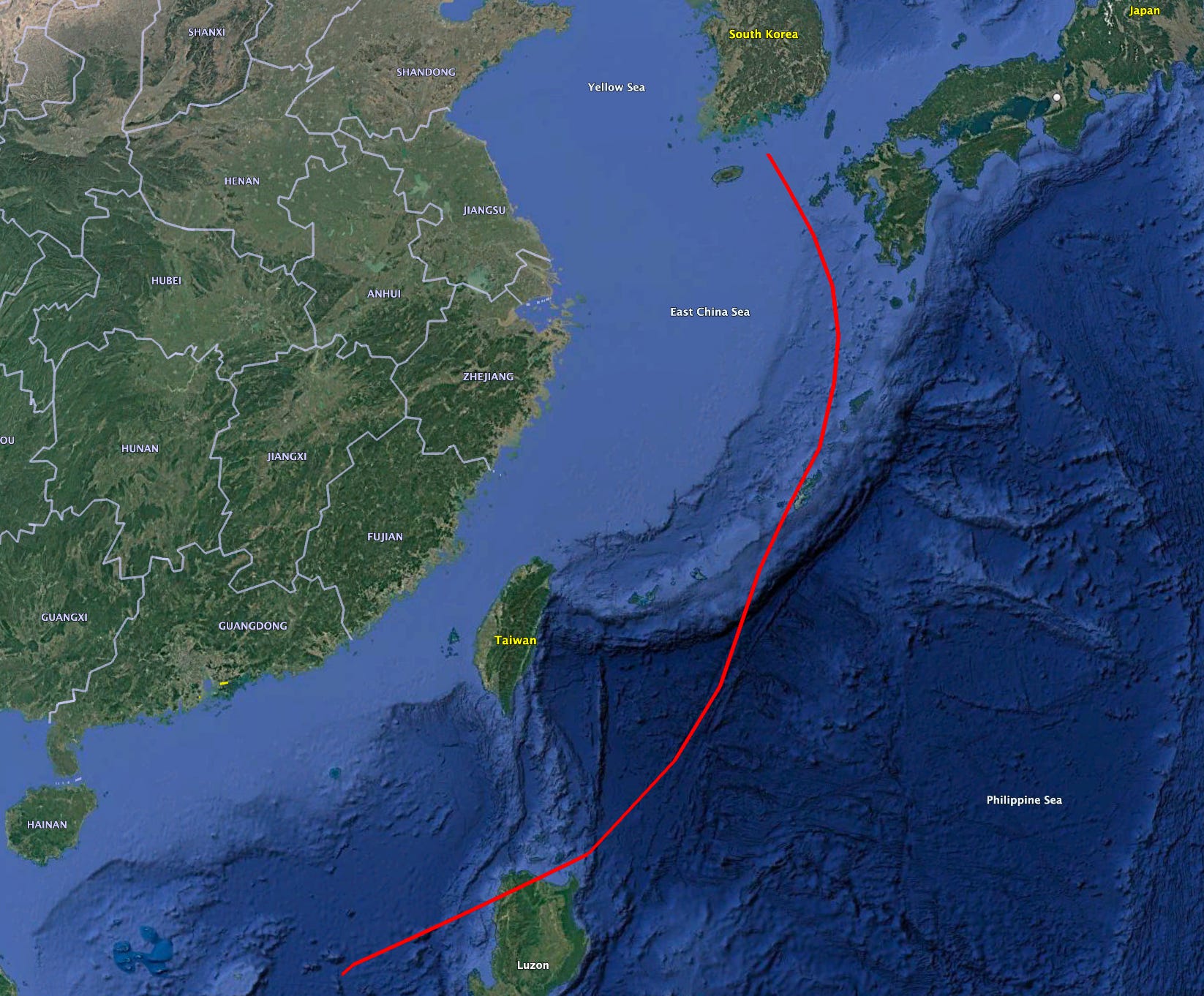
That red arch is roughly 350 nautical miles from the Chinese coast.
Review the threat envelope.
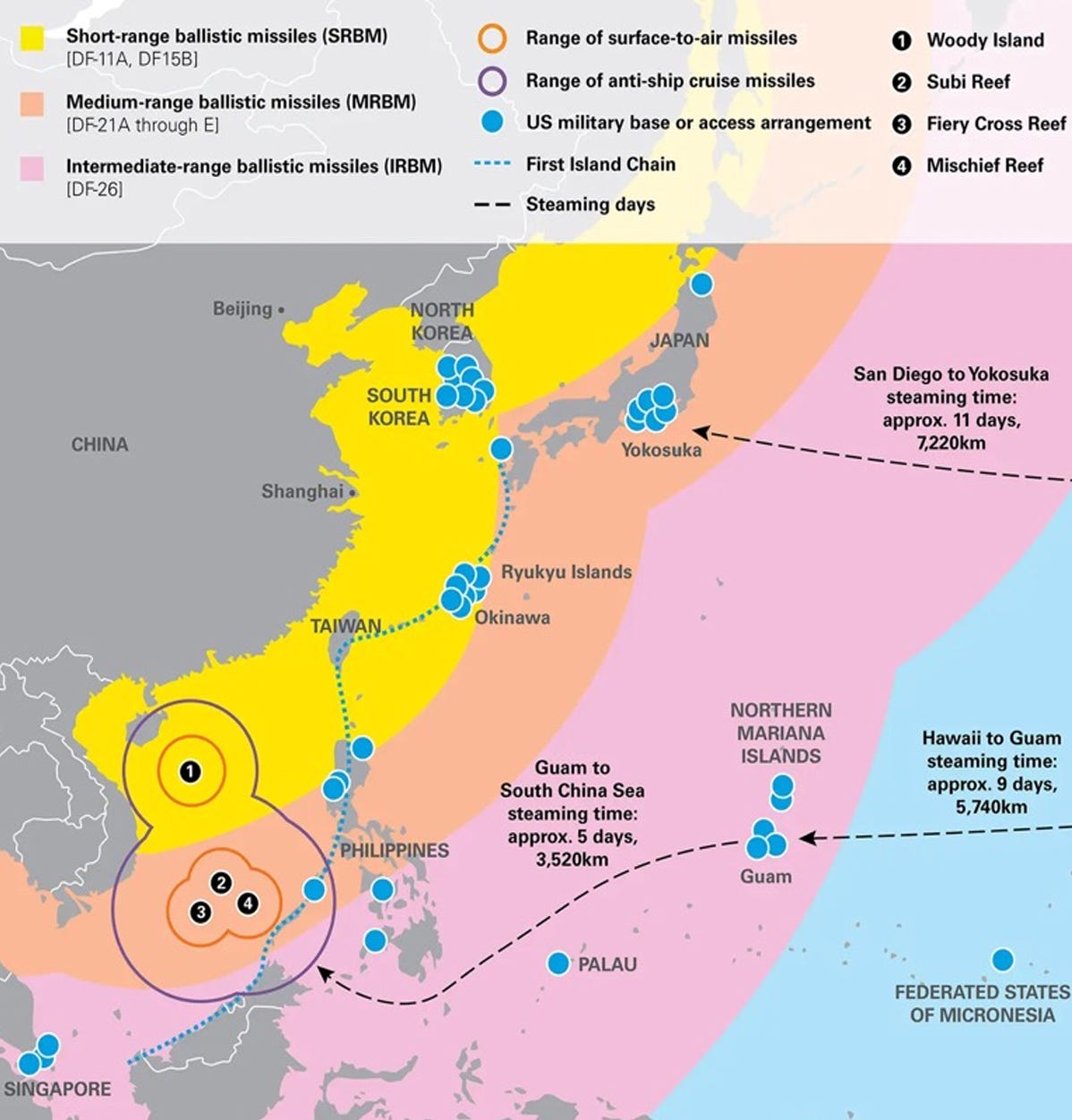
The only things missing here are the anti-aircraft and anti-ship missile batteries on the mainland, but you get the idea.
Regulars here know one of my hobby horses is the absolute horror show I see that will result at the very start of a Great Pacific War should that come. Here’s an example from a post of mine from a few years ago:
There is one thing we know for absolute certainty should war come west of the International Date Line.
Aircraft from reconnaissance to strike will be thrown in the battle at D-0 at as high of a rate as maintenance and refueling will allow. It will continue at a pace, ignoring cute concepts as “crew rest,” until an operational pause is needed in order to allow fuel and parts to catch up or we run out of aircraft and pilots. While that is going on, American airman will be bailing out and ditching over the western Pacific due to everything from malfunctioning engines and avionics, combat damage, running out of fuel, or just plain getting lost. The ocean is vast, one-man life rafts are very small.
Unlike previous wars, we will not have our submarines performing lifeguard duties. They are too few, too large, too expensive and have a higher and best use elsewhere … underlined by the bottom topography in the yellow zone. IYKYK.
Speaking of the yellow zone, unlike in the Vietnam War, we will not have surface ships performing lifeguard duties offshore with their helo detachments either. They too are too few, too large, too vulnerable in the yellow zone, and have a higher and best use elsewhere.
For the absolute worse reasons, we will not be procuring what would be exceptional for this job, seaplanes like the Japanese US-2 I discussed in the previously linked article.
When the next Great Pacific War comes, and better than average chance it will—for reasons we probably do not expect—the mission to rescue downed airmen lost at sea, in volume over wide expanses of contested seas, must be done. The American people and their elected representatives will not tolerate a shrugging of the shoulders and a “we didn’t expect this” response.
What could do it if historical methods either cannot or should not be used?
Did this unexpected rescue of the Army pilots by the Saronic Corsair serve as one of those “taps on the shoulder” pointing us toward what we should be getting more of rather than less?
So, what can we do besides keep a folder full of excuses as to why we abandoned our airmen to drift at sea, abandoned?
Well…how about a string of pearls of Unmanned Surface Vessels (USV) like Saronic’s Corsair stationed inside that arc?
They are too small to be engaged by Chinese long range strike assets.
Of course, there are a lot of known-unknowns here:
How long can they stay on station, standing by for a mission, before they have to be recalled for refueling/service?
How can they be modified to be a better recovery platform for downed airmen?
How do we develop a CONOPS for airmen to know if they cannot make it back to the carrier or land base where to divert for rescue by USV? (A more primitive version of this has already been done. See the WWII Luftwaffe's rescue buoy (Rettungsboje)).
I could come up with about ten more points, but those were the first three that came to my head.
These are about the same size as my center console bay boat I fish out of, and can be launched, well, by almost anything the Navy has.
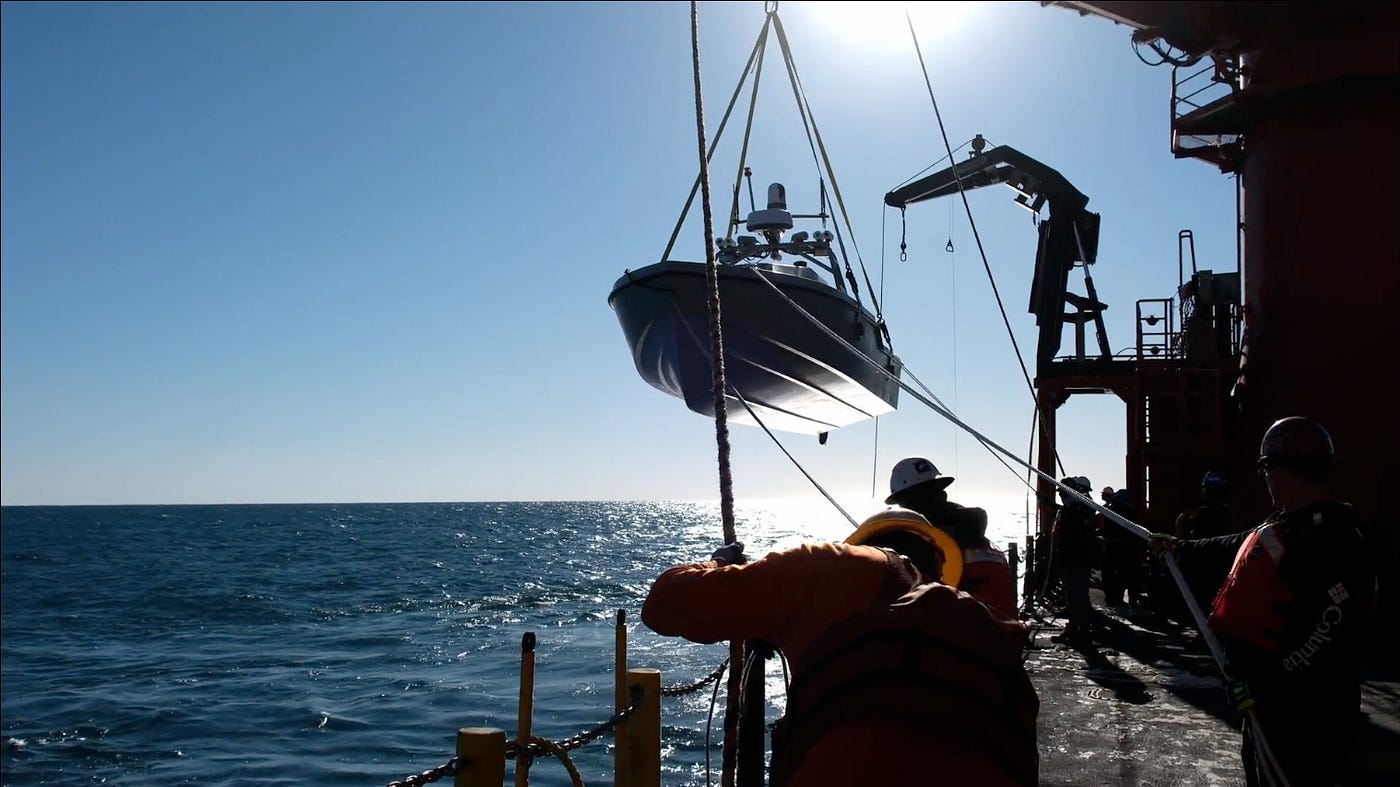
We have a criminally underutilized Navy Reserve. This would be a perfect mission for a revitalized Navy Reserve.
If the Corsair isn’t enough boat, well, the next size up is the Mirage.
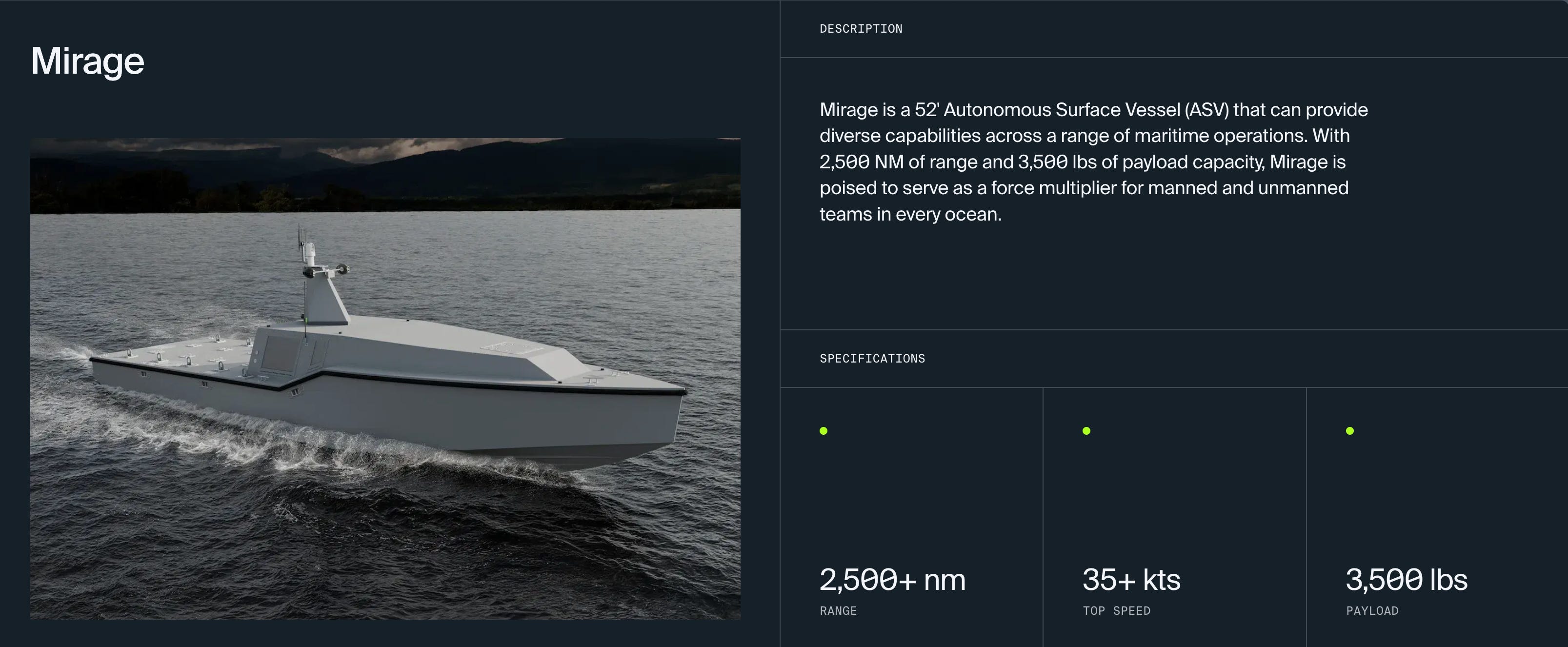
Forget at sea rescue…I want to turn that into a mine layer…but perhaps that is another post for another day.
We have a mission that needs to be filled. Good news: a Corsair or Mirage can be configured for other missions as well, but I think we’ve demonstrated that we have a modification needed.
We would be fools not to take advantage of this gift.
Just keep in mind that in this instance the aircrew were in a condition to board on their own.
Having said that? Gotta' run what ya' brung and any asset is better than none.
Go Navy, save Army. Great post.