
We Don't Need a New Force Design, or National Strategy
...we need a national understanding

Rumors are floating about that, in the words of Brent Sadler,
The U.S. Navy is reportedly on the cusp of a new force design plan.
OK, then what? Who is ready to hear and act on it? Has the intellectual battlefield been properly prepared?
We’ve seen over the last few decades, both political parties and the parade of SECDEFs, SECNAVs, CNOs, Commandants of the Marine Corps issue this vision, that strategy, this design, but they all seem to exist in their own little world, impacting only on the edges (big exception is the USMC’s Force Design 2030 that is still creating friction, for good reason) —but not quite gripping and pulling the multiple lines of control that impact our national and maritime strategy.
Yes, there are entire sub-sectors of our military industrial complex, think tanks, war colleges, and the satellites of information, opinion, and influence that orbit around them, that need—indeed rely—on these regular releases of the latest view of the future. They need them to argue for their programs, their world view, their organizational priorities, or to just pump out their required word count. They need a ‘Ref. A’ for their think pieces—the newer the better.
I know.
But in the end, how much does that matter? Hard to say, but as we stand today almost a decade and a half after President Obama’s Pacific Pivot with a plurality of the chattering classes in the national security arena breathlessly wondering, ‘What is that Elbridge Colby up to!”, it is clear that we are not wanting for strategy, designs, or punditry extruding from the organs of the DC beltway.
No. What we are missing is a national understanding based on two questions:
What are we?
What do we want to be?
The first question is the easiest, and the one whose view was warped for decades by external influences like the demands of the Cold War, the 1990s unipolar anomaly, and the misbegotten GWOT decades that, though they have left our field of view, have not our vision has not returned to normal.
It’s there, we just don’t see it and those who should make the argument won’t step up to do it.
What is this ‘National Understanding?’
Simple:
We are a maritime and aerospace power by geography and comparative advantage.
We are a republic, not an empire.
We have no desire for, nor need of, other nations’ land or people. We covet nothing, only desire something we have known from the beginning:
Taking care always to keep ourselves by suitable establishments on a respectable defensive posture, we may safely trust to temporary alliances for extraordinary emergencies. Harmony, liberal intercourse with all nations, are recommended by policy, humanity, and interest. - President George Washington, 1796
Why a maritime and aerospace power? Let’s start with, as we should always, with a trip to the chart room.

This is the geographic reality centuries of blood, toil, tears, and sweat have bequeathed to us. We have not fought a war on our southern border in almost two centuries, and have not fought one on our northern border in over two centuries. We have some of the best neighbors one could have by land.
At sea, we have two oceans. One HUGE, the other quite large. Above us there is the expanse of the universe, access to which we will have the dominant position.
Our greatest global challenger is the People’s Republic of China (PRC) on the other side of that HUGE ocean, the Pacific. Here is what it looks like from us to them.

That is the U.S. in the upper-right corner, that is the PRC in the upper-left corner. In the middle is the U.S.’s 50th State, Hawaii. Wake Island and Guam further west from there.
Economically, culturally, and militarily—that is the center stage as we approach mid-century. That is where our focus must be…and that is a problem.
As a nation, we don’t understand it yet. Too many of our institutions and the people in them continue to be lost in the inertia of the last century that maintains a world view founded by the Old World; Europe and the Middle East.
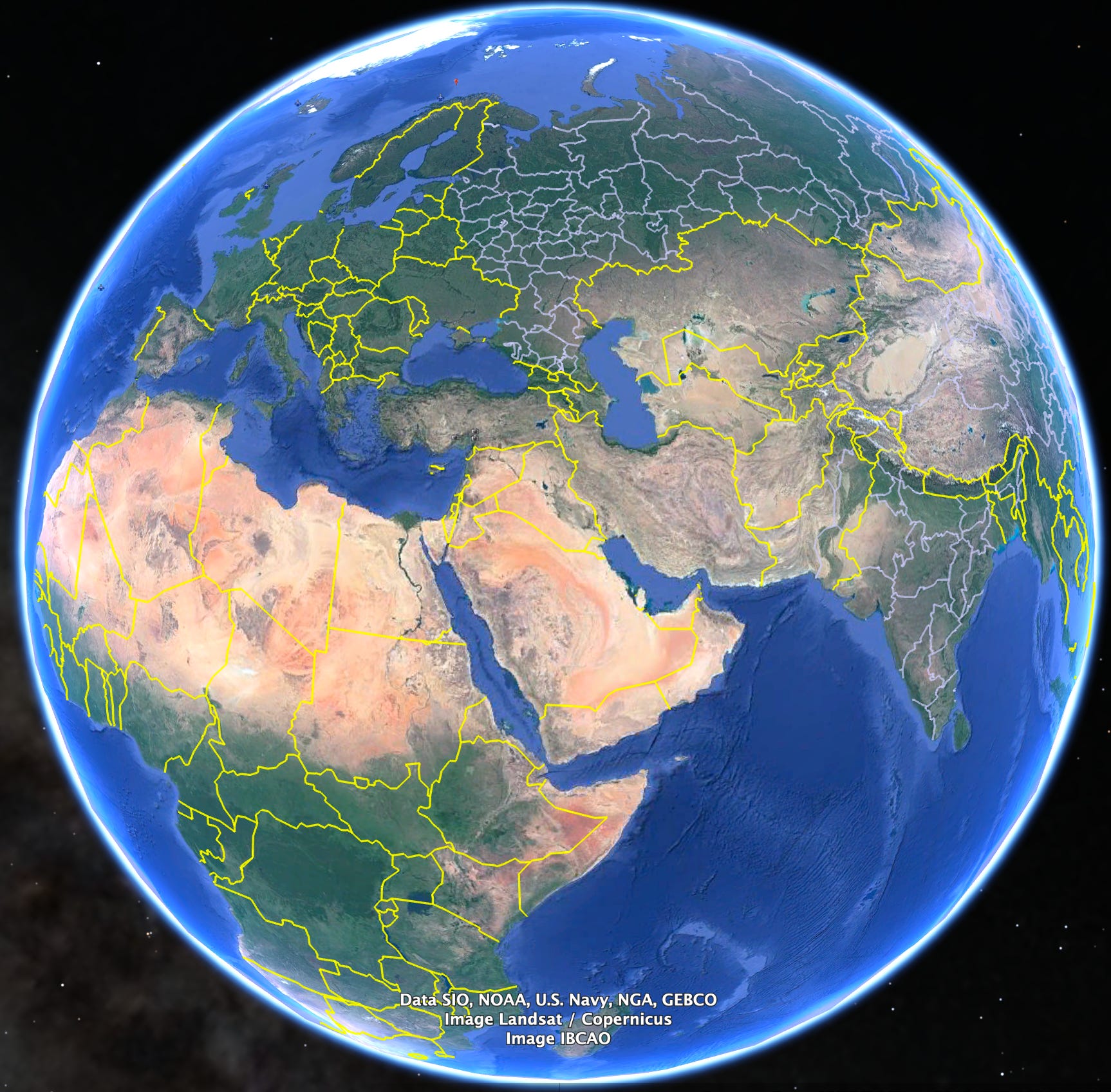
That is, literally, the other side of the world. Of concern to the U.S.? Of course. But a primary concern? No.
That is the province of our allies and friends on the Eurasian landmass who are land powers. They are not the prostrate and supine nations after WWII. They are generations past that. Should there be security concerns, we can help them best from the air and sea, and ashore as needed—but we cannot design our national security around their land problems.
An American defense designed around war on the Eurasian landmass, that would be land-heavy and slow to move at distance, will be of limited utility to any conflict in the Pacific, if it could ever get to where it needed to be.
An American defense designed around war in the Pacific, that would be maritime and aerospace-heavy and quick to move on a global basis, would be of critical utility to any war on the Eurasian landmass.
At peace, the balance of U.S. maritime and aerospace forces must be well-capitalized and ready to go at day-1. U.S. land power? What we have as a standing force must be highly mobile, expeditionarily minded, and backed up with robust reserve and National Guard forces that will be able to get up on the readiness step quickly—to respond in any direction the threat comes from.
We really don’t know where the next war will be. We have the global ‘central position’, and we should be designed to take advantage of it. Maneuver forces trapped somewhere without the ability to get where they are needed are little more than sunk cost.
That latter part is why in any design, and this can be handled best in the Naval and Air Force Reserve, there needs to be an overbuilt strategic airlift and sealift that can move that reserve land component to back the expeditionary forces already in the fight next to our land-power allies.
That is it. It does not need to be more complicated than that. Why are we not already at this understanding?
Leadership.
We have not promoted strategic thinkers, in the main. That is not where our incentives and disincentives are. If anything, we disincentivize that skillset as much as we do sustained superior performance at sea or in combat theaters.
No, our self-identified best and brightest are constantly given shortened operational tours so they can get back to ‘important’ DC jobs, Joint requirements, or academic box checking. Pass on those and your promotion opportunities are limited.
In a Darwinian way, those who excel at bureaucracy, acquisitions, getting priorities through POM cycles—as opposed to extensive operational experience that develops the perspective required for strategic thinking—have been rewarded and promoted.
Smart people all, but they are good at what brought them here. The results of the recent decades speak for themselves.
Institutions that we rely on to take what opportunities are available to develop strategic thinking allowed themselves to be distracted by trendy academic socio-political theories, or even worse, Orwellian thought police.
We had senior Navy leaders who when given the opportunity to discuss seapower and the requirements of a sea power, instead regurgitated JPME I & II executive summary talking points that just reinforced the intellectual chaff that it Jointspeak.
If they weren’t doing that, they spent rare personal and institutional capital defending divisive non-military domestic political theory they mistakenly thought they were compelled to spot-weld on to the fleet.
We had some leaders who seemed to get it, but they mostly topped out at INDOPACOM.
For reasons we know all too well, our uniformed maritime leaders simply would not help bring the story to the American people. The civilian appointees, seeming boxed in by the twin moats of 1947 and 1986, were generally mute or in lockstep with the more often than not Army-weighted Pentagon culture. Our institutions? I think we covered that sufficiently in 2022.
We had Bryan McGrath at the start of this decade try to set an example in Maryland, but few followed his exceptional example.
Why has a naturally gifted and born maritime power allowed an Asian land power to build the world’s largest—and growing—navy?
Why has a naturally endowed and traditionally excellent aerospace power allowed momentum in space to decay to let others catch up?
Why can we not seem to develop modern maritime and aerospace systems with any sense of urgency and demonstrations of competence?
Simply, the American people and their elected representatives allow it.
Why do they do that? Because we lack the critical mass of understanding of how being masters of the maritime and aerospace domains underwrite everything else our republic will need in the future to be secure, prosperous, and as a result—be able to support an international order to develop along the lines we will understand as good, and not drift into lawlessness or dystopian systems of autocracy.
We can publish all the strategies and designs we want, but they will be built on sand. For them to really be substantial, they must be built on a firm foundation of a national understanding of what we are, and what we want to be.
The mistakes of the past are in the past, but we do not have to stick to this failed road. It must start at the top. Leaders, in uniform and out, in the maritime community must step forward and tell our story. Educate the American people and their elected representatives. If someone insists on wasting precious time discussing their thoughts on the “Joint Force” — then that person should be invited to pursue excellence elsewhere and not given a public-facing position again.
You have an Executive Branch already on the record wanting a stronger Navy. Even in an Army-heavy national security leadership, the advocates are there. Congress can be sold.
It is time to start upsetting a few people. Flood the zone with hard truths. If you have to, bring a globe with you. Reality is on our side.
UPDATE: Brent Sadler put this out on X earlier today, and I thought it fit well with this post.
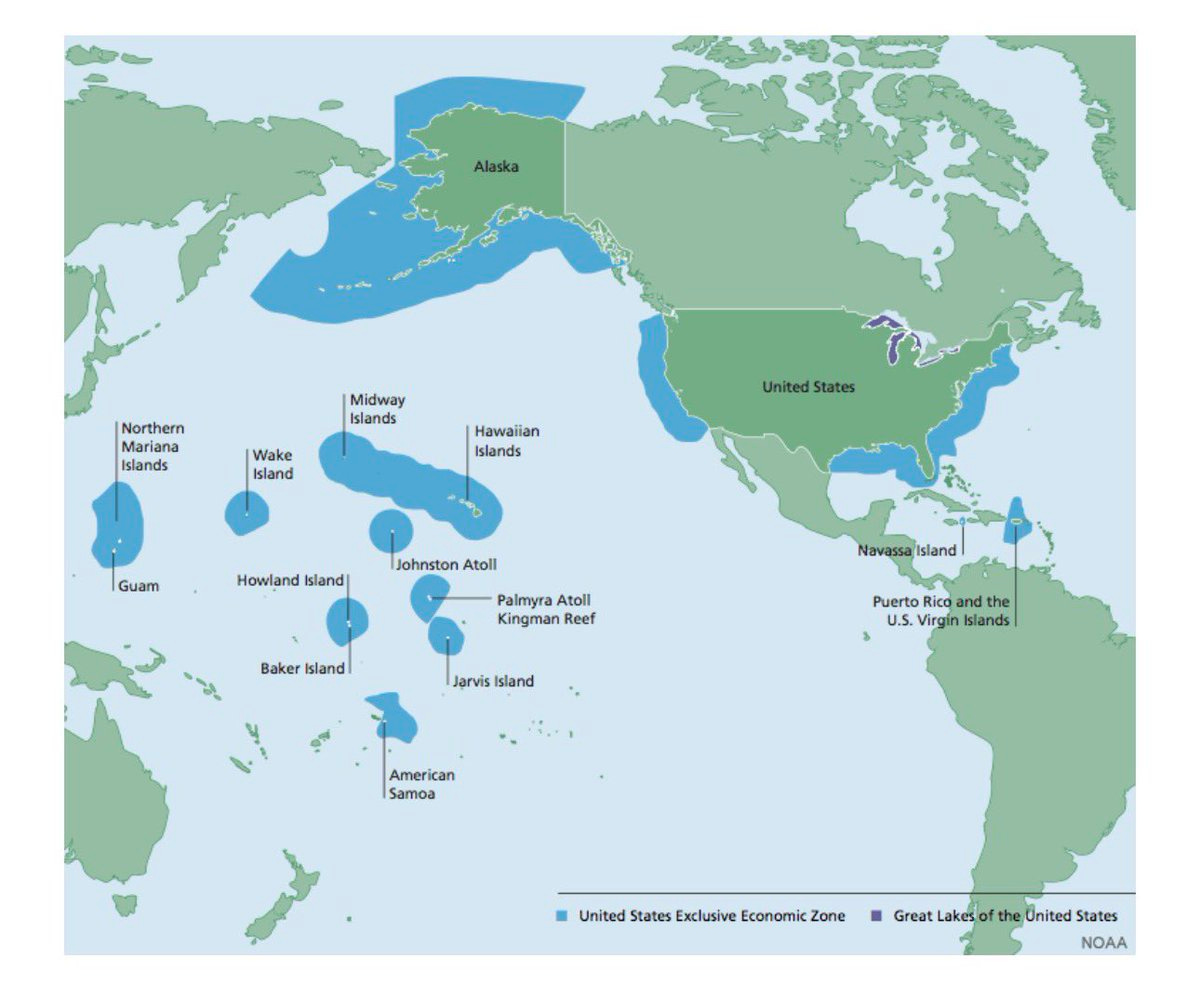
“We are a republic, not an empire.”
I am not so sure if that is true anymore.
We may retain the format of a republic by holding elections but if by a republic you mean a citizen soldier who has a stake in the nation then I must demur.
Comparisons between America and the Roman Republic are ubiquitous. There are however too many similarities. Endless wars. Declining middle class. Massive debt. Unchecked immigration resulting in cheap labor. Debased currency. Bread and Circuses - I mean NFL games and Taylor Swift, etc.
We really need to get our own house in order before political assassination become commonplace. Oh wait….
Excellent brother.