
What Does the Expected New CNO Think?
well, just read his answers

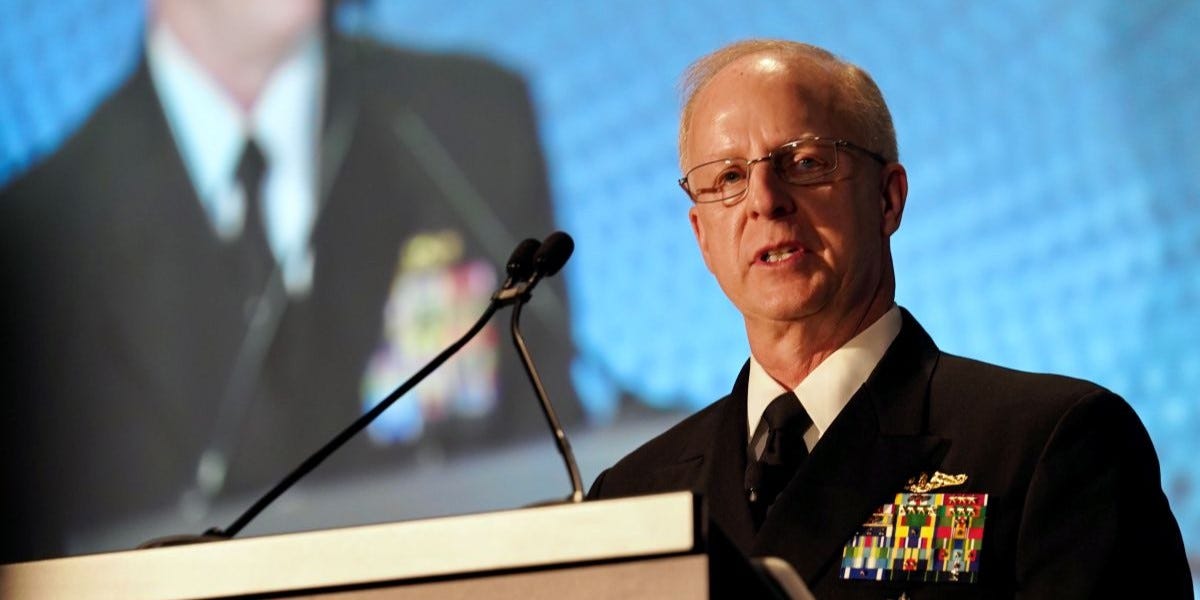
The Senate Armed Services Committee has published the advance policy questions, with answers, for the nominee for appointment to be our next Chief of Naval Operations, Admiral Daryl L. Caudle, USN.
If you want to know where he stands or where the center-mass of consensus thinking on topics are, this is about as good of a source as any.
Yes, there is a fair bit of boilerplate, but there are some solid answers as well. Even better, it is a serious set of questions. I did word searches for some of the socio-political garbage previous CNOs invested their personal capital in, and none of it is there.
To keep things short, I do have a list of Top-5 quotes for you to consider.
The first one is, for me, the most important one. It has been eight years since the horrible summer of 2017. It has been 2.11 WorldWars since the last of the collisions of that summer, and yet we are still working through the issues.
The report of the post-mishap investigation into the June 17, 2017, collision between the USS Fitzgerald and a Philippine-flagged container ship found that the collision was avoidable and resulted from an accumulation of “smaller errors over time,” ultimately resulting in a lack of adherence to sound navigational practices. Similarly, the report of investigation into the collision of the USS John S. McCain and merchant vessel Alnic MC on August 21, 2017, also was avoidable and resulted primarily from crew complacency, over-confidence, and lack of procedural compliance.
37. What has the Navy done to counter the “smaller errors over time” and the “complacency, overconfidence, and lack of procedural compliance” that resulted in these otherwise “avoidable” collisions?
Simply said, the Navy is embracing, assessing, and leveraging near misses using the best practices honed over decades by Naval Reactors versus only responding to corrective actions following a significant incident or mishap. Prior to these collisions, the Navy reviewed each incident as a standalone issue and established a working group to directly tackle and address the deficiencies without holistic extensions of the problems or ruthlessly executing all corrective actions to closure. As a direct result of the collisions in 2017 and the fire that destroyed USS BONHOMME RICHARD (LHD-6) in 2020, the Navy implemented sweeping changes with a targeted objective of increased safe operations through rigorous compliance with safety standards, increased focus on improving overall fleet manning and training, improving long-term sustained readiness and establishing a stronger culture of operational excellence. In October 2021, the Navy established the Learning to Action Board (L2AB), which supports the implementation of critical recommendations and measures sustainment and effectiveness of those recommendations over time. The L2AB, co-chaired by the Undersecretary of the Navy and the Vice Chief of Naval Operations, has overseen a cross organizational review and completion of 90 percent, or 349, investigation findings from nine major incident investigations in order to implement more holistic and enduring solutions.
The team has matured into the establishment of the Office of Warfighting Advantage (OWA), which aims at working with Assessment Partners such as the Naval Safety Command, the INSURV Board, the Navy Inspector General, and Fleet Commanders through their Fleet Improvement Offices to identify risks and operational gaps early in order to avoid mishaps. Additionally, this office is focused on improving the Navy’s ability to self-assess, self-correct and continuously improve through enhanced organizational learning at all Echelons and can be credited with the combined reduction of 20 percent in simple fires and 93 percent in major fuel related fires Navy-wide over the last four years, as well the restructuring, streamlining, and simplification of the Navy’s shore-based infrastructure chain of command, and comprehensive overhaul of Sailor Quality of Service policies and programs. If confirmed, I am committed to leveraging the partnerships forged by the Office of Warfighting Advantage to continue to improve unit readiness and safeguard operational excellence, prioritize programmatic and materiel changes necessary to continued improvement of ship operational safety, leadership development and Quality of Life for our Sailors. Finally, I am committed to further developing our ability to leverage the massive data the Navy acquires through the various formal assessment 14 and reporting processes to better predict and forecast areas for deep dives to prevent mishaps from occurring in the first place. AI and large language models (LLMs) will be essential to this effort.
38. If confirmed, specifically what more would you do to correct for the deficiencies that were found to have caused these two collisions?
The Navy has made sweeping changes to the training and continuous assessment processes across the Surface Fleet over the last decade. All Navy homeports now have established seamanship and navigation simulators where bridge and combat information watch teams are qualified by courses and instructors certified to the International Maritime Organization’s Convention on Standards of Training, Certification and Watchstanding. In addition, all officer training pipeline schools have been revamped with focused training and accountable assessments in these areas from Division Officer to Commanding Officer that must be passed before assignment.
The Navy has also invested heavily in our System of Systems approach ensuring greater integration and realistic training across our ship control systems. If confirmed, I will work to ensure that those efforts are accelerated and fielded to support our Sailors and watchstanders. Finally, the Navy continues to evaluate our Force Generation and Readiness processes to ensure we can meet the dynamic needs of our Nation under any circumstances with acceptable levels of risk. If confirmed, I will continue to assess and improve our ability to generate forces to meet the readiness requirements of our peacetime presence needs and future combat missions.
Finally, I will continue to accelerate and enhance the work being done by the OWA. This organization continuously looks across the enterprise, working with Assessment Partners and Fleet leadership, to identify issues early and often before they become incidents by leveraging near miss data and formal assessment data sources. The OWA supports breaking down some of the stovepipes in learning, training and assessing that led to the collisions and establishes processes to accelerate lessons learned across communities.
Again, 2.21 WorldWars. This should not be a top-shelf discussion topic in 2025. That it is one, should be a note of caution to all the work we need to do in order to get OPNAV to move a bit faster than the speed of smell.
The second topic is one that, as I outlined last fall, I non-concur with.
The Nuclear-Armed Sea-Launched Cruise Missile (SLCM-N) program, reintroduced in the 2018 Nuclear Posture Review to counter Russian and Chinese regional nuclear threats, gained legislative momentum with the Fiscal Year 2024 National Defense Authorization Act (NDAA), which mandated its development and initial operational capability by 2034 despite initial cancellation in 2022. Recent Congressional funding reflects bipartisan support.
60(a). Do you support the SLCM-N program as a necessary enhancement to U.S. theater deterrence?
Yes. I fully support the development of the SLCM-N program. SLCM-N will provide the President with enhanced flexible response options, which will support deterrence of limited nuclear use and high-consequence non-nuclear strategic attacks against U.S., allied, and partner vital interests.
60(b). Given Congressional backing and the deteriorating global security environment highlighted in 2024 testimony, what steps would you take to accelerate the SLCM-N’s timeline to meet the 2034 operational goal?
If confirmed, I am committed to seeking the necessary resources to develop SLCM-N to the Congressionally mandated IOC of 2034. Further, I am committed to working with select stakeholders, such as Strategic Systems Program, to accelerate facets of the SLCM-N program as applicable.
This subject is infuriatingly short of a discussion of the opportunity cost of bringing back SLCM-N into the U.S. Navy—especially a desire to put it on surface ships.
Any scenario where we need to “support deterrence of limited nuclear use and high-consequence non-nuclear strategic attacks” can be ‘serviced’ by our manned bomber force or SSBN. If you missed it, see my Monday Substack for more detail.
The third topic makes me want to consider day-drinking as an option.
80. What is your assessment of the root cause of the announced three-year delay to the Constellation-class frigate program?
While delays in shipbuilding programs are always the sum of several challenges, I understand the main drivers associated with the three-year delay in the Constellation-class Frigate program primarily stem from the iterative design change process and, to some extent, the shipyard’s underperformance. Specifically, a systemic overstretch and capacity deficit combined with the inherent technical complexities of developing a new, advanced warship. Requirement creep has been a common narrative in recent programs. There are also challenges such as workforce shortages, excessive workload on the shipbuilder, and design maturity issues, all of which are symptoms reflecting an underlying strain on our nation's ability to concurrently design and construct multiple complex naval platforms. The Constellation-class frigate program is an example of these common themes.
81. At what point should we consider expanding frigate production to a second source?
As to whether the Navy will pursue a second shipbuilder to produce Constellation-class Frigates, I will defer to the Secretariat for that issue. I am aware an assessment team recently reviewed the details of the Frigate Program. Based on this review, recent visits to Fincantieri Marine Group, and a thorough data-informed analysis of the Frigate Program metrics and milestones, the Secretary of the Navy is currently evaluating options for the way ahead.
First of all, the FREMM is not a “new, advanced warship.” Hell, it isn’t even the latest in frigate design. The same people who failed the Navy and the nation with LCS, DDG-1000, and CG(X) have done everything they could to turn an 85/15 program into a 15/85.
It is criminal. Simply criminal. There is a lot of blame shifting and deflection in that answer, which is unfortunate. It was caused by the U.S. Navy which has failed to reform itself.
That being said, absolutely we need to be building the Frankenfrigate from two yards, not one.
The fourth issue seems esoteric, but it’s not.
In March 2023 testimony before the Senate Armed Services Committee, Secretary of Defense Austin stated that, with respect to losing “S-band” spectrum, “it be devastating, … it would take us somewhere north of 20 years to try to recover from -- from the loss of that -- that spectrum. Parts of that spectrum are vital to our national defense and the protection of the homeland. And -- and, you know, in order to describe exactly -- well, you know what the -- what the specific platforms are, but we would have to go to a classified session to speak in detail about this. But I would tell you that this is not something you can fix overnight once you break it. It’ll take 20 years plus to recover from that.” Discussions about the U.S. Navy potentially losing access to the S-band spectrum (2-4 GHz), critical for systems like the Aegis SPY radar, have intensified since 2023 due to commercial pressure for 5G expansion, with Pentagon leaders warning that sharing or vacating this band could disrupt military operations.
131. What Navy systems might be affected by this loss of “S-band” spectrum, in your view?
Loss of access to the S-band spectrum would pose an unacceptable risk to our Navy’s ability to successfully conduct its missions and to our nation’s defense. The Navy’s core homeland defense architecture—including the Aegis SPY radar and other systems contributing to the Golden Dome—is anchored in the 3.1 to 3.45 GHz mid-band range. Vacating this spectrum jeopardizes our ballistic missile defense capability and undermines national readiness.
Beyond these systems, S-band supports a wide range of mission-critical functions: precision-guided missiles, secure communications, air traffic control, weather radars, and radio frequency signature characterization. Our six Major Range and Test Facility Bases in CONUS depend on this spectrum to develop, test, and validate the next generation of naval technologies.
Preserving DoD primacy in this band is essential to the Navy’s ability to effectively train, operate, modernize, and fight. Once the Navy’s access to the spectrum is compromised, the path to recovery spans decades. We cannot afford that timeline.
132. Were DOD required to “vacate” or leave the spectrum “S-Band” instead of sharing, what would be the potential operational and monetary costs to the Navy, in your view?
Spectrum is a finite and non-renewable strategic asset. Forcing DoD, and specifically the Navy, to vacate the S-band would impose profound operational risk across critical missions, including homeland defense. Our premier radar systems, including Aegis SPY and the Golden Dome architecture, rely on the unique characteristics of the 3.1 to 3.45 GHz band to enable threat detection, tracking, and missile defense.
Loss of access would degrade radar performance, impair target discrimination, and compromise command-and-control across the Joint Force. Development and fielding of substitute capabilities would take decades and cost hundreds of billions without guaranteeing equivalent performance. Preserving this spectrum is not simply a technical requirement—it is a strategic imperative.
133. How long would it take for the Navy to move its systems to a different area of the spectrum, in your view?
The Navy’s use of the S-band is based on optimal propagation characteristics, detection fidelity, and the practical constraints of shipboard integration. There is currently no viable alternative band that offers comparable performance.
Hypothesizing, if technically possible, relocating systems to other areas of the spectrum would take decades, if at all, requiring wholesale system redesigns, hardware replacement, and significant ship alterations. Such a shift would impose significant operational and financial costs.
Spectrum cannot be seen, felt (unless properly powered, natch), smelled, or touched…but it is as critical as iron, coke, chromium, and steel. It is hard to explain to even technically-minded people. I’m not sure who has the charter to address Caudle’s concerns, but give them all the support they need.
Finally we have one of my hobby horses.
The NDAA for FY 2017 modified the Joint Qualified Officer (JQO) system established by the Goldwater-Nichols Act in two significant ways. First, it broadened the statutory definition of “joint matters” to expand the types of positions for which an officer can receive joint duty credit. Further, it reduced from three years to two the minimum tour length required for joint duty credit.
176. What is your assessment of the effectiveness of the FY 2017 modifications to the JQO system?
Overall, I assess this was a positive change. The Goldwater-Nichols Act modifications of 2017 have allowed the Navy to balance career timing and an officer’s primary warfare specialty when assessing JQOs proportional time in a joint tour to the overall career prior to Flag selection. The overall types of positions which were expanded are not all encompassing as the variance of experience vastly depends on the type of joint duty the specific service member lands in following Flag selection.
177. In your view, are the requirements associated with becoming a JQO, and the link between attaining joint qualification and eligibility for promotion to flag officer rank, consistent with the operational and professional demands of Navy line officers?
Yes, professional demands are routinely balanced by detailers and the service members themselves as joint training and the associated requirements to become a JQO are spread over an officer’s career through touch points where professional demands, the needs of the Navy, and the development goals of the officer allow.
178. In your view, what additional modifications, if any, to JQO prerequisites are necessary to ensure that Navy officers are able to attain both meaningful joint and Navy-specific leadership experience and adequate professional development?
I believe JQO prerequisites are currently aligned appropriately and managed to allow specific experience. If confirmed, I will work with the Secretary of the Navy to weigh any need for changes and make recommendations.
The entire Joint process extruded from the archaic Cold War dead hand of Goldwater-Nichols serves nothing but itself. It warps the system. It is inefficient, and is here because its here because its here because its here.
There is no objective measure to show that it is a net positive on our Navy or military as a whole.
Joint delenda est.
So, there we go. Since Richardson isn’t around, I don’t see why Caudle won’t be confirmed…so give the full statement a read. It’s and 80/20 read for me…and that is enough to press 100.
It’s nice that we have great nav and target systems for our ships. We have great weapons. But, if we wind up broke dick in the water, seamanship is the thing that will make the difference.
Can you keep her afloat? Can you restore power? Can you restore or adapt secondary propulsion? Can you read a fucking paper chart and use a compass and sextant? Can you do the math manually? Can you signal? Can you sail by the stars and use the barometer to avoid bad weather? Can your senior enlisted remain engaged to guide young officers in the details? Can you actually function as a crew?
I was seeing slippage in 1994. God only knows what it looks like now…
The skills at sea that really matter are being displaced by technology, which may not be impervious to EMP. You won’t know, until you KNOW.
Fully agree with Sal that the GWN Joint Officer requirements are a dead hand, and only prohibit mid-grade officers from getting the vital experience they need in their warfare disciplines. That's much more important that speaking joint-ese. Save that for post-command Captains that are headed for flag rank, or will fill joint positions. We have a training program for officers going to NATO jobs to teach them Alliance operations. Send officers going to "joint" jobs to a similar "joint" training program; maybe at the JPME school in Suffolk, Va?