

We Have a Lot of Things to Relearn
We Have a Lot of Things to Relearn
there is a difference between a well executed retreat and a rout

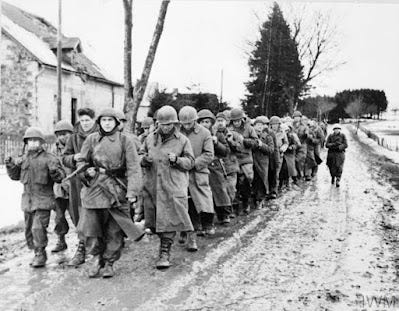
Thinking of the American military's readiness for the next large war, there is rightfully a lot of concern that after a couple of decades of imperial policing wars in Central and Southwest Asia, that not only are we ill-equipped for a major peer conflict ashore, but that we've forgotten much of what is considered fundamental aspects of significant force-on-force combat.
The Russo-Ukrainian War has offered some good reminders, from the utility of armor, artillery, and logistics that clever peace time theorists were wishing away, but on the land side of the equation, what are some other critical capabilities that we have had the luxury of generations to forget about?
Over at the Modern War Institute, they have a reminder of something I think most of us have not given much thought to recently; the operational level fighting retreat.
New from MWI comes a 450 page book in PDF on the very subject; Armies in Retreat: Chaos, Cohesion, and Consequences;
Battlefields are dynamic. In large-scale combat operations, opposing forces seek to gain control of terrain, to outmaneuver one another, and to employ combined arms to gain positional advantage. The objective, much more often than not, is to advance. When one side is successful, that means retreat, withdrawal, or evacuation is likely for the other. Studying those armies who suffer the ignominy of retreat, then, is crucial to understanding war and command.
The word retreat, however, is almost taboo in US Army literature. The new Field Manual (FM) 3-0, Operations only uses the word five times, four of which are describing the near-destruction of the North Korean People’s Army in September 1950. ... Instead of using the word retreat, FM 3-0 uses the term retrograde—and the manual only dedicates one paragraph to retrograde operations.
For the Marine Corps, the apparent reversion to discussing retreat is similar. Marine Corps Doctrine Publication 1, Warfighting, the US Marine Corps’ capstone doctrinal document, uses neither retreat nor retrograde. Instead, it talks about “rapid, flexible, and opportunistic maneuver.” Maneuver warfare, the Marine Corps’ warfighting doctrine, focuses combat power against enemy cohesion, seeking to create “panic and paralysis, an enemy who has lost the will to resist.”
But what happens when your force is the one close to losing the will to resist? How does a commander keep an army together? The United States military has a long history of retreating, from the early days of the American Revolution to the evacuation of Afghanistan in 2021. Some retreats bought time or space. Others allowed commanders to regroup or reposition for follow-on operations. Others reflected strategic defeat.
Armies in Retreat: Chaos, Cohesion, and Consequences seeks to balance the historical and practical narrative, giving readers a better understanding of why, how, and when armies retreat.
...
Ignoring the concept of retreat by omission or sophistry in doctrine won’t make it go away. Russian forces entering Ukraine a year ago likely did not think a retreat was in their future but a year of combat operations have revealed otherwise. The first Soviet forces into Afghanistan likely did not think they would watch a retreat across the Hairatan Bridge a decade later, nor did most of the many American forces who fought in Afghanistan over nearly two decades envision the exit from the country that took place in August 2021.
So instead of ignoring the lessons of history, we should study them to be better equipped for the future. Armies in Retreat is our effort to facilitate that study.
Think a bit about the maritime side of the house. What topic would you like to see get this treatment as we organizationally try to focus on the war to come?
As for me, I'd like something on forward maintenance and arming centered on the Western Pacific Campaign of WWII. I also would like a similar focus in combat logistics of the same. Perhaps fighting in the face of significant unit loss like we had in the Guadalcanal Campaign.
That's my Top-3.
BZ to MWI.
I think it would be something along the lines of "you can't control what isn't under your guns (or missiles, these days)"...so hulls make a difference. You have to BE THERE to affect events and being spread too thin to cover strategic areas of operations matters a great deal. You can't be operating on a shoe string and be prepared - your capabilities must be robust (personnel, ammunition, logistics, repairs, replacement) and up to date.
As far as retreat goes, I think our doctrine across the board always looks at retreat as an opportunity for counter-attack. In the case of Ukraine, if they have the resources, our doctrine might LET the Russians break through at Bahkmut. Let them pour west toward Dnipro on the E-50 and keep them on one axis of advance with blocking forces N/S of the E-50 and keeping the advance south of the Samara River. Then put your HIMARs/artillery north of the Samara River, pinch off the salient around Pokrovsk with armor. Then you hit them with anti-tank weapons/infantry all along the line from the south, and artillery from north to roll them up with a culminating battle in the flat fields in front of the Dnipro River at Dnipro. Destroy them in detail. Then you reconstitute and counter attack back towards Donetsk and south to the Azov from Pokrovsk. The Russians couldn't replace the logistical train or combat power from that kind of loss and the war would be over very quickly.
Fwd maint is a good one. How about the detailed systems knowledge and physics of the wwii aviators and sailors that were able to "hack" their systems ( esp the non working ones) to maje them more effective. How do we replicate that?
And what do we do about cost/complexity of shipbuilding. We arent cranking out a Gearing a weak any more. The original CV Ranger cost $260M in Fy23 $$$$. Vs 17B$ and counting for 78.