
China Develops World's Oldest Warship
...take a powder everyone...and instead focus on what we're not doing

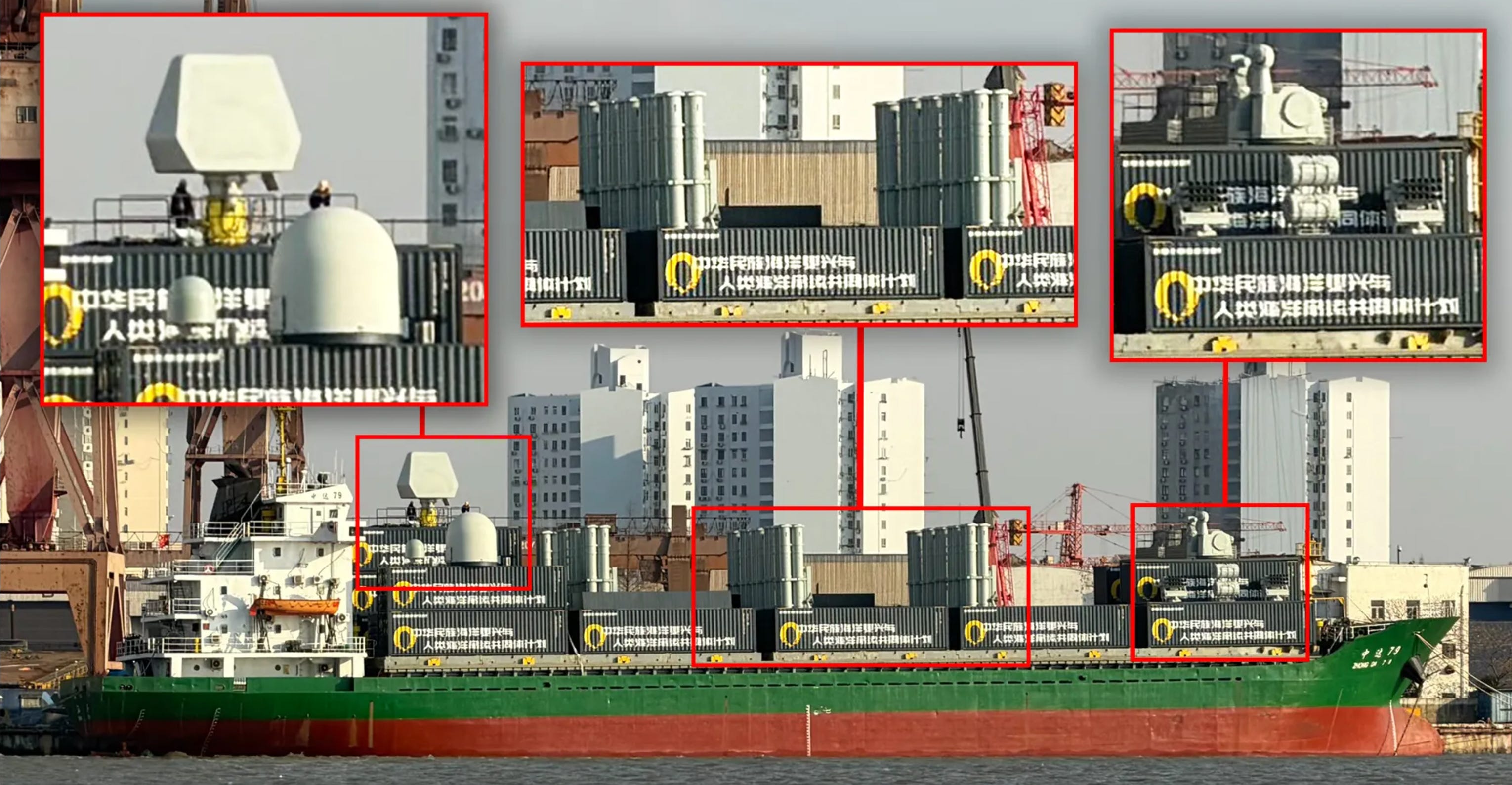
Sometime, hundreds of thousands of years ago during the Early or Middle Paleolithic Era in a coastal area, lake, or river system, our primitive ancestors discovered the use of a dugout canoe to fish and transport what they could hunt or gather from the surrounding forest.
At some point, they discovered that another band of humans were harvesting from their best fig tree and were fishing from their river.
They were barely holding on as it was; they could not afford to let others come in and take one of their most reliable food sources.
Two of the younger men found out where the outsiders were camped. It was half a day upriver, but impossible to get to by land. So, a wise village elder decided instead that they would get all of their canoes together with as many men as they could carry and would arrive in the outsiders’ camp in the middle of the night. Kill all the men older than 5 winters and any women over 15 winters. Keep the rest as slaves.
There you had the first conversion of a civilian vessel for military purposes. We humans have been doing this for hundreds of thousands of years since.
That is one reason why I grinned at the slightly hyperbolic reaction in some quarters to the “in front of God and everyone” pictures from the People’s Republic of China (PRC) of what, simply put, is an auxiliary cruiser.
What should have been shocking to everyone is that we have not seen this until now. I’ll outline why in a moment, but let’s make sure everyone is looking at the same thing.
As expected, Tyler Rogoway over at TWZ has one of the best summaries about what we can see out there.
Near the bow of the vessel, high-up mounted above two containers, we see an Type 1130 30mm close-in-weapon system (CIWS) for last-ditch defense against incoming threats, especially cruise missiles. One container lower, on both sides, we see Type 726 decoy launchers mounted on top of another pair of containers. The large cylindrical pods appear to be emergency life rafts, likely required because of the expanded crew size to make a concept like this work.
Then we get to the real eyebrow raiser, a deck literally covered with containerized vertical launchers. Installed five wide and three deep, each packing four large launch tubes, this arrangement gives the vessel a whopping 60 vertical large launch cells. This is two-thirds the VLS capacity of a Arleigh Burke class Flight I or II destroyer.
I have always been a supporter of auxiliary cruisers. I won’t repeat my arguments again. If you are so inclined, head on over to my OCT 2024 article, Auxiliary Cruisers: Now More Than Ever.
In October of 2020 we even discuss the topic on The Midrats Podcast with Chris Rawley.
In general, there are two reasons why a nation would have auxiliary cruisers in their fleet.
At the initiation of hostilities, a nation does not have enough warships to conduct required missions. As something beats nothing, civilian ships are requisitioned and armed with whatever is readily available and are asked to do the best they can and hold the line until better ships arrive.
A desire to be a bunch of sneaky bastards. In the finest naval tradition of flying under a false flag, disguising yourself as something rather harmless, in order to get close to the enemy to do damage in a way an easily identifiable warship would not be able to do.
At the edge of living memory, there are two representatives of these two types of auxiliary cruisers. I’ve written about both types over the last couple of decades.
For Type-1 you have HMS Jervis Bay, for Type-2 Kormoran.
Which type does the PRC’s ship represent?
Auxiliary cruisers are most effective in the opening days and months of a war. After that, they usually don’t last that long.
The PRC has the world’s largest navy, but what they lack is good power projection capabilities to attack enemies’ far-flung military assets. In oceans awash with container ships…if you have good OPSEC and can get a dozen or so properly located near ports and bases, you could make D+0 a mess, buying you time. Heck, your Q-Ships might even be able to make it back home…or some of them. Maybe.
That would be the Type-2, but I’m thinking something quite different.
If you’re familiar with what I’ve written before and listened to the podcast with Chris, what I see as a requirement for U.S. Navy auxiliary cruisers is of the Type-1 variety. Specifically, we simply do not have enough VLS cells to bring the fight to the enemy. As OPNAV cannot or will not deploy an effective way to reload VLS in an expeditionary manner, we will fight with what we bring with us from across the Pacific. Our DDG’s VLS cells will be—if we are smart—overburdened with Standard Missiles for the air threat, with precious few filled with TLAM for strike ashore.
Yes, Type-1 auxiliary cruisers will barely be able to conduct point defense for themselves, but if they sail with the DDG they come under her umbrella, and then those 50-60 VLS cells become, in essence, the Honorverse missile bus everyone has been asking for over the last decade.
That is what the U.S. Navy needs, the Type-1, and I think that is what the PRC is thinking as well. Yes, they may have some fun Type-2 surprises for D+0, but if they want to fight a quick, exceptionally violent war to gain what they see as their territory (Taiwan, most likely COA), then they need a large first salvo from their fleet. Even though their shipyards are at full capacity, if they need more, sooner, in volume…then loading up container ships for one time use is not the worst idea.
That is for the PRC to focus on. What should we do?
The recent attention to the topic is an opportunity to return to a flashing-red requirement: arming the unsexy but important—in addition to getting more VLS forward faster via auxiliary cruisers.
This requirement almost magically has a solution to the expected manning follow-on question, in that it matches up with an underutilized resource sitting right in front of us.
All the other services, especially the Army and USAF, recapture the investment in their active force by having extensive combat capability in the Reserves and National Guard. What about the U.S. Naval Reserve (USNR)?
Oh, boy.
As I’ve outlined for years, if we are talking about arming the auxiliaries or creating our own auxiliary cruisers, the USNR is the exact place they should be.
What would these detachments look like from a manning perspective? As our friend Matt Hipple mentioned, at a baseline, an officer, chief, and maybe six guys to do the military part on top of the ships “civilian” manning. Matt is a bit more aggressive than I am, and I have a role in life as the greybeard, so to give a bit of wiggle room, let’s make that two officers, two chiefs and 12 guys.
16 naval reservists per ship, max. Ask for 16, the Navy will give you 10. BA/NMP/etc…the rest will show up after mobilization. (call me. my seabag is packed)
What if we had a dozen per coast in the naval reserve? 192 naval reservists per coast for a nation of 340 million. Looks like rounding-error risk hedging.
Matt’s initial offering of 8 personnel? I think that is the correct number for the USNR teams assigned to the self-defense systems our unarmed USNS auxiliaries would need.
What do we not have at the moment?
We are cold-iron right now for both the hardware and the crews to do this. Yes, most of our USNS are fitted for but not with - but unless something has been done in the background, we are not ready to do the actual fitting should war come.
This is probably one of the easiest things our Navy could do—but alas—as with so many things, there is not proper advocacy inside the DC-centric Navy to push this priority to the front. If you have evidence to the contrary, please DM/email/put in comments.
Using this same mindset towards arming our auxiliaries, we should look at the USNR to man a fleet of auxiliary cruisers. What would the manning requirement be for these? Not much.
I’d like to see that study…but I would offer this: they need to be USS with 100% military personnel. They will go in harm’s way. There will be losses. We barely have enough merchant mariners to man what USNS we have.
Arm the auxiliaries. Commission auxiliary cruisers. No new technology needs to be developed. No new weapons systems. A little supporting systems reconfiguring, sure. Some imaginative personnel policies and investments, yes. Really rounding errors.
Risk=minimal. Reward=high.
It is still an institutional failure this wasn’t done years ago, but that is the past. We cannot do anything about that. What we can control is what we do now.
Final note: one of my favorite parts of this whole episode is that several sources translated the Chinese text on the shipping containers. Of course, they knew this would be done…so they picked well:
“The Maritime Renaissance of the Chinese Nation and the Concept of a Shared Ocean Future for Humanity”
“Marine revival of the Chinese nation and a shared oceanic future for mankind”
“Plan for the maritime revival of the Chinese nation and the community of shared future for mankind in the ocean”
“Strive for the maritime revival of the Chinese nation and a community with a shared future for mankind in the ocean”
Cheeky bastards.
Respectfully approved.
Every day, the odds of a Great Pacific War increase in my mind. Right now, I give it a 65% chance. The PRC is unquestionably planning for a fight, and they are doing so gleefully.
We should be doing the same. Chop, chop. History is anxious.
Interesting take. Am I reading correctly that you are framing this as a modern auxiliary cruiser, more “missile magazine on a civilian hull” than a deception-first Q-ship, and that the real lesson is that the PRC is looking for cheap ways to add salvo mass while the U.S. still has no credible forward reload or surge VLS plan?
OK, before we get too far ahead of ourselves this is much like the failed missile barge idea. Question #1: how many empty VLS tubes are currently in the underway fleet? Putting more empty missile tubes underway does not add to fire power. We don't have enough missiles of every type and getting less all the time as we continue to blast shore targets (and cheap enemy drones). It would be a better arguement if we had so many missiles that we can't deploy them for lack of launch tubes. In my Naval underway experience on four ships I don't recall ever deploying with a full complement of missiles. Maybe there are missile factories out there just waiting for orders to build, but I doubt that is the case. Building and deploying more empty missile launchers is a waste of time. r/Karl